Surf and turf represents one of dining’s most indulgent combinations. This classic dish pairs premium seafood with quality beef on a single plate. Restaurant menus worldwide feature this luxurious pairing, while home cooks recreate it for special occasions.
Understanding the Surf and Turf Concept
The term surf and turf describes any meal combining seafood and red meat. Surf refers to ingredients from the ocean, while turf indicates land-based proteins. This pairing emerged in American steakhouses during the 1960s and quickly became synonymous with upscale dining.
The concept celebrates contrasting flavors and textures. Additionally, it offers diners variety without choosing between favorite proteins. Therefore, surf and turf became popular for celebrations, romantic dinners, and special events.
Traditional combinations typically feature lobster tail with filet mignon. However, modern interpretations incorporate diverse seafood and beef options. Chefs now pair scallops with ribeye, shrimp with sirloin, or crab cakes with strip steak.
The History Behind Surf and Turf
American steakhouses popularized surf and turf during the mid-20th century. Restaurants sought ways to showcase both ocean and land delicacies simultaneously. The pairing appealed to customers wanting premium dining experiences.
Las Vegas casinos helped establish surf and turf as a luxury standard. High-end restaurants used this combination to attract gamblers and entertainment seekers. Consequently, the dish became associated with celebration and extravagance.
During the 1970s and 1980s, surf and turf reached peak popularity. Wedding receptions, anniversary dinners, and business meals frequently featured this duo. The combination represented prosperity and fine dining achievement.
Common Surf and Turf Combinations
Lobster tail paired with filet mignon remains the quintessential surf and turf presentation. The lobster’s sweet, delicate meat complements the tender, buttery beef perfectly. This combination appears on steakhouse menus nationwide.
Jumbo shrimp or prawns offer another popular seafood choice. Grilled or sauteed shrimp pair excellently with New York strip or ribeye steaks. Moreover, shrimp cost less than lobster while maintaining the surf and turf appeal.
Sea scallops provide a refined alternative for modern preparations. Their mild sweetness and meaty texture balance well against beef’s robust flavor. Additionally, scallops cook quickly, making timing easier for home preparation.
Crab cakes or king crab legs create regional variations. Maryland-style crab cakes complement grilled steaks beautifully. King crab legs offer dramatic presentation similar to lobster tails.
Some creative chefs incorporate salmon, tuna, or swordfish as the surf component. These fish varieties provide heartier seafood options that stand up to beef’s strong flavors. Therefore, adventurous diners enjoy expanded surf and turf possibilities.
Selecting Quality Ingredients
Premium ingredients determine surf and turf success. The seafood must be fresh or properly frozen, never previously frozen and refrozen. Fresh lobster tails should smell clean like ocean water without fishy odors.
Beef selection requires equal attention to quality. Filet mignon offers maximum tenderness with mild flavor. Ribeye provides more marbling and robust beef taste. New York strip balances tenderness and flavor between these options.
Look for USDA Prime or Choice grade beef when possible. Prime grade contains superior marbling, creating juicier, more flavorful results. However, Choice grade delivers excellent quality at lower cost.
According to Bon Appétit, understanding beef grades and cuts significantly improves home cooking results and ensures proper value for money spent.
Seafood sustainability matters for environmentally conscious diners. Wild-caught seafood often tastes better than farm-raised options. Nevertheless, reputable farms produce quality products with less environmental impact.
How Chefs Prepare the Beef Component
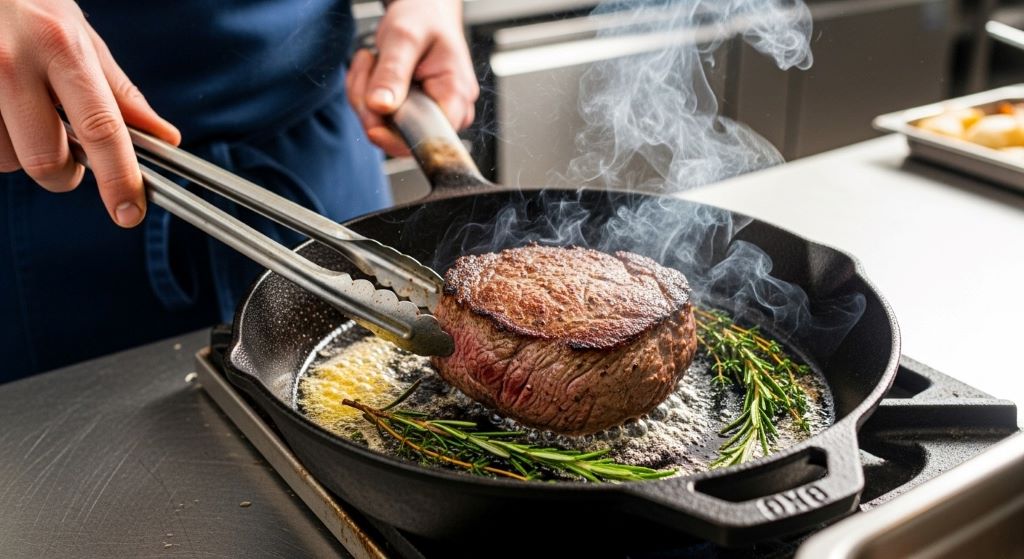
Professional chefs typically prepare steaks using high-heat methods. Grilling over open flame creates attractive char marks and smoky flavor. Pan-searing in cast iron skillets produces excellent crust development.
Steaks should reach room temperature before cooking. This practice ensures even cooking throughout the meat. Additionally, chefs generously season beef with salt and pepper before cooking.
The reverse sear method provides consistent results for thicker cuts. Chefs slowly roast steaks in low ovens until nearly done. Then they sear the exterior over high heat for caramelized crust.
Butter basting enhances flavor during the final cooking stages. Chefs add butter, garlic, and fresh herbs to the pan. They spoon this mixture over steaks repeatedly while finishing.
Internal temperature determines doneness accurately. Rare steaks reach 120-125 degrees Fahrenheit, medium-rare hits 130-135 degrees, and medium achieves 135-145 degrees. Therefore, instant-read thermometers ensure perfect results.
Resting steaks after cooking remains crucial. Meat should rest five to ten minutes before serving. This allows juices to redistribute throughout the steak rather than running onto the plate.
Preparing the Seafood Component
Lobster tail preparation varies by cooking method. Chefs often butterfly tails by cutting through the top shell. This exposes meat for even cooking and attractive presentation.
Broiling represents the most common lobster cooking method. Chefs brush tails with melted butter and seasonings. They broil four to six inches from heat until meat turns opaque.
Grilling lobster tails creates smoky flavor and beautiful grill marks. Chefs place butterflied tails meat-side down initially. Then they flip them to finish cooking shell-side down.
Shrimp require less cooking time than lobster. Overcooked shrimp become rubbery and tough. Therefore, chefs cook shrimp just until they turn pink and opaque.
Scallops need dry surfaces for proper searing. Chefs pat scallops thoroughly with paper towels before cooking. Additionally, they remove the small side muscle if still attached.
High heat creates the desirable golden crust on scallops. Chefs use very hot pans with minimal oil. They avoid moving scallops during cooking to achieve perfect caramelization.
Timing and Coordination Techniques
Coordinating surf and turf components challenges home cooks. Each protein requires different cooking times and temperatures. However, proper planning ensures everything finishes simultaneously.
Professional chefs prepare components in strategic sequence. They typically start thicker steaks first since they require longer cooking. Meanwhile, seafood cooks quickly during final minutes.
Some chefs partially cook steaks earlier, then finish them with seafood. This technique reduces stress during service. Additionally, it prevents overcooking delicate seafood while waiting for beef.
Keeping finished components warm without overcooking requires skill. Low-temperature ovens hold cooked steaks safely. However, seafood should go directly to plates to maintain texture.
Restaurant kitchens use multiple cooking stations for efficiency. Grill cooks handle steaks while sauté stations manage seafood. Therefore, professional kitchens achieve perfect timing more easily than home setups.
Classic Seasoning and Sauce Approaches
Simple seasoning often works best for premium proteins. Salt and pepper allow natural flavors to shine. However, some preparations benefit from additional herbs and spices.
Garlic butter sauce complements both surf and turf components. Chefs melt butter with minced garlic and fresh parsley. This versatile sauce enhances without overpowering delicate flavors.
Béarnaise sauce provides classic French accompaniment. The tarragon-flavored hollandaise pairs excellently with beef. Additionally, its richness complements lobster’s sweetness.
Lemon butter or drawn butter serves seafood perfectly. Clarified butter with fresh lemon juice brightens rich flavors. Moreover, this simple preparation highlights quality seafood.
Peppercorn sauce offers robust beef accompaniment. Crushed peppercorns create bold flavor against tender filet. Nevertheless, this strong sauce might overwhelm delicate seafood.
According to Food Network, versatile steak sauces can elevate both home and restaurant preparations when properly balanced with other components.
Side Dishes and Accompaniments
Classic steakhouse sides round out surf and turf presentations. Baked potatoes loaded with butter and sour cream remain traditional favorites. Garlic mashed potatoes offer creamy comfort alongside rich proteins.
Asparagus provides elegant vegetable accompaniment. Grilled or roasted asparagus spears add color and nutritional balance. Additionally, their mild flavor doesn’t compete with main proteins.
Creamed spinach delivers traditional steakhouse appeal. The rich, smooth texture complements both seafood and beef. However, lighter preparations suit health-conscious diners better.
Caesar salad offers refreshing contrast to rich proteins. The crisp romaine and tangy dressing cleanse the palate. Moreover, salad provides textural variety on the plate.
Roasted Brussels sprouts present modern vegetable options. Caramelized edges add appealing flavor complexity. Therefore, contemporary restaurants often feature these instead of traditional choices.
Plating and Presentation Techniques
Professional plating creates visual appeal before the first bite. Chefs typically position steak as the plate’s focal point. Seafood rests beside or partially atop the beef.
Height adds dimension to presentations. Chefs might stack components or use side dishes for elevation. Additionally, sauces drizzled artfully around plates enhance visual interest.
Garnishes should complement rather than clutter presentations. Fresh herb sprigs, lemon wedges, or microgreens add finishing touches. However, excessive garnishing appears dated in modern cuisine.
White plates showcase food colors most effectively. The clean background highlights beef’s char and lobster’s white meat. Therefore, most fine dining establishments prefer simple white serviceware.
Temperature matters for optimal presentation. Hot plates keep food warm during dining. Nevertheless, seafood arrives best on room-temperature plates to prevent overcooking.
Modern Surf and Turf Variations
Contemporary chefs reimagine surf and turf with creative interpretations. Short rib preparations replace traditional steaks in some versions. Braised or grilled short ribs offer different texture and flavor.
Wagyu beef elevates luxury to new levels. Japanese Wagyu’s intense marbling creates unparalleled richness. However, this premium option significantly increases cost.
Exotic seafood variations expand beyond traditional choices. Diver scallops, Chilean sea bass, or Mediterranean octopus provide sophisticated alternatives. Additionally, these options showcase chef creativity and regional influences.
Surf and turf burgers bring casual interpretations. Restaurants top beef burgers with crab cakes or lobster meat. Therefore, diners enjoy surf and turf flavors in relaxed settings.
Smaller portions appeal to modern health awareness. Petite filets paired with single scallops satisfy without overwhelming. Moreover, reduced portions allow room for multiple courses.
Conclusion
Surf and turf combines ocean and land’s finest offerings in one memorable meal. This classic pairing features premium seafood alongside quality beef, creating contrasts in flavor and texture. Chefs prepare each component using appropriate techniques, then coordinate timing for simultaneous service. Whether featuring traditional lobster and filet mignon or modern variations, surf and turf remains synonymous with celebration and fine dining. Therefore, understanding proper preparation techniques allows home cooks to recreate this restaurant favorite successfully.
Frequently Asked Questions
What are the most popular surf and turf combinations?
Lobster tail with filet mignon represents the classic combination. However, shrimp with ribeye, scallops with New York strip, and crab cakes with sirloin also remain popular choices offering excellent flavor balance.
How much does surf and turf typically cost at restaurants?
Restaurant surf and turf ranges from $40-80 at casual steakhouses to $100-200+ at upscale establishments. Price varies based on seafood choice, beef cut, and restaurant quality level.
Can I prepare surf and turf at home successfully?
Yes, home cooks can successfully prepare surf and turf with proper planning. Start steaks first since they require longer cooking, then add quick-cooking seafood during final minutes for coordinated timing.
What wine pairs best with surf and turf?
Pinot Noir offers versatility pairing with both components. Alternatively, Chardonnay complements seafood while standing up to beef. Some diners prefer serving separate wines for each protein component.
Is surf and turf considered healthy dining?
Surf and turf provides high-quality protein, omega-3 fatty acids from seafood, and essential nutrients. However, rich sauces and large portions increase calories. Moderate serving sizes and lighter preparations create healthier versions.
Related Topics:
How to Have a Cheaper Barn Wedding (With Maximum Impact)