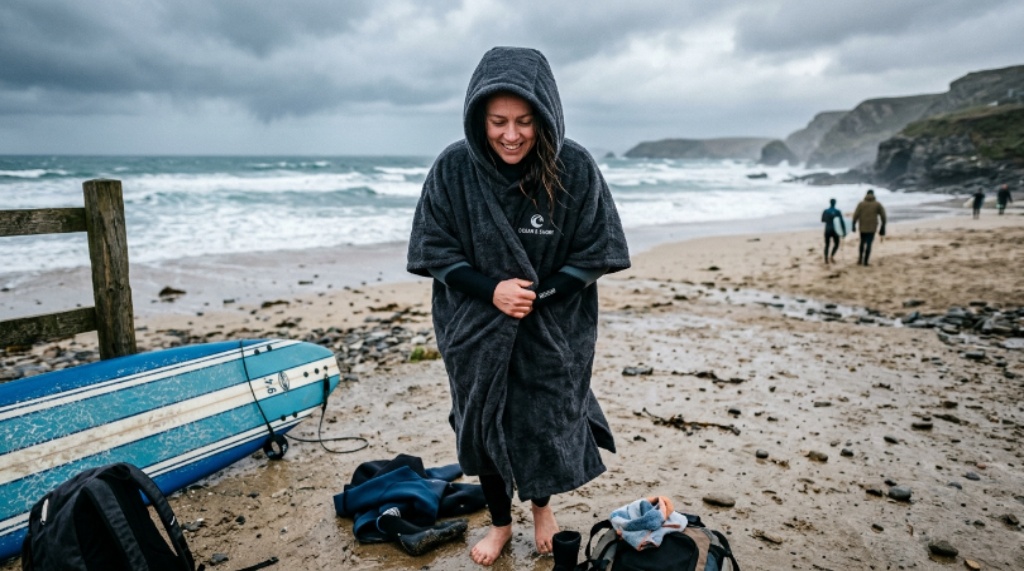
Stepping out of the ocean on a cold morning feels amazing — until the wind hits. That is the moment a good surf poncho earns its keep. Whether you surf, swim, or simply spend long days at the beach, having the right changing robe can make every session more comfortable. However, with so many options on the market in 2026, knowing what to look for is not always easy. This guide breaks it all down in simple terms so you can make a confident choice.
What Is a Surf Poncho and Who Needs One?
A surf poncho is a hooded, pullover-style garment designed for changing and warming up after time in the water. It looks similar to a large hoodie but is made from materials built to handle wet conditions. Surfers, swimmers, triathletes, and beach lovers all use them.
The poncho serves two main purposes. First, it gives you a private, comfortable space to change out of your wetsuit or swimwear without needing a changing room. Second, it traps your body heat and helps you warm up fast after leaving cold water. Therefore, it is not just a convenience item — it is a practical piece of kit for anyone who spends real time outdoors near water.
Understanding the Materials That Matter
The fabric inside a surf poncho determines almost everything. It controls how warm you stay, how fast you dry, and how long the poncho lasts through regular use.
Microfibre is one of the most popular choices. It is lightweight, soft against the skin, and absorbs water quickly from your body. Most modern ponchos use a microfibre interior for this reason. Additionally, microfibre dries out much faster than traditional towelling, which means less mildew smell and a lighter load to carry home.
Terry cotton is another common option. It is thicker and feels more like a traditional towel. It absorbs more water but takes longer to dry. This works well for warm-weather beach trips where drying speed matters less.
Fleece-lined interiors take warmth to another level. If you surf in cold conditions — early mornings, autumn sessions, or northern coastlines — a fleece-lined poncho is worth the extra investment. The fleece holds heat close to your body even when the outside of the poncho is damp.
For the outer shell, look for a water-resistant finish. Some ponchos use a DWR (Durable Water Repellent) coating that causes water to bead and roll off the surface. This keeps the outer layer from becoming waterlogged in light rain or spray, which is exactly what you need on unpredictable days at the coast.
How to Read Weather Conditions Before You Buy
Not all surfers face the same weather. Someone in tropical waters has completely different needs from someone surfing the Atlantic coast in November. Therefore, matching your poncho to your typical conditions is essential.
In warm climates, a lightweight quick-dry poncho is the ideal choice. You do not need heavy insulation. Instead, focus on fast drying time, breathability, and a relaxed fit that is easy to pull on and off. A thin microfibre design does this well and packs down small enough to fit in a backpack.
In cooler or unpredictable climates, you need more protection. Look for a thicker construction, a snug hood, and ideally a fleece interior. The hood is especially important. A deep, well-fitted hood blocks wind from your neck and ears — two areas where you lose body heat fast after a cold water session.
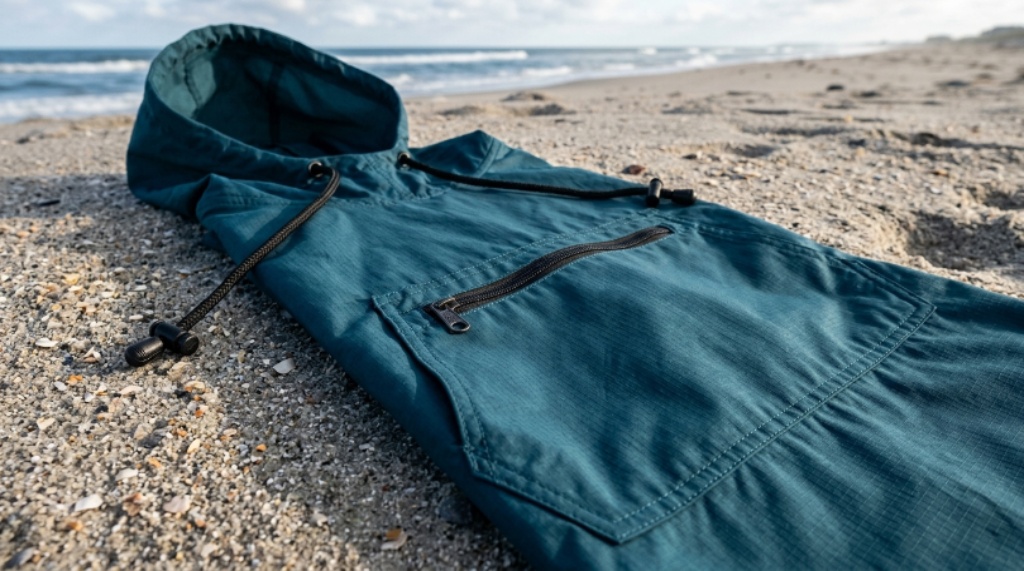
For mixed or changeable weather, versatility is the key. Some ponchos include zip pockets, adjustable hoods, and mid-weight fabrics that work across a range of temperatures. These are excellent for surfers who travel or who ride year-round in places where the weather shifts quickly.
Fit, Size, and Design Features Worth Checking
Getting the right fit matters more than many people expect. A poncho that is too short will not cover your lower body while changing. One that is too baggy will catch the wind and feel awkward to move in.
Most ponchos come in small, medium, large, and extra-large. Some brands also offer kids’ sizes. When in doubt, size up slightly. A poncho should be roomy enough to move your arms freely underneath and long enough to reach mid-thigh or below.
Here are a few design features that add real value:
- A deep, lined hood that stays in place in the wind
- Front kangaroo pocket or side pockets for your phone, keys, or wax
- Thumbhole cuffs that keep the sleeves from riding up
- A longer back panel for extra coverage while sitting or changing
- Flatlock stitching that lies flat against the skin and does not chafe
Additionally, consider the loop or carry bag that some ponchos include. After a session, a poncho will be damp and sandy. A dedicated bag keeps your other gear clean and makes packing up much easier.
The Difference Between Waterproof and Water-Resistant
These two terms are often used interchangeably, but they mean different things. Understanding the difference helps you buy the right product for your needs.
Waterproof means the fabric will not let water through, even under sustained pressure. Truly waterproof ponchos are less common and tend to be heavier. They are designed for full rain protection rather than post-surf changing.
Water-resistant means the fabric repels water up to a point. A water-resistant robe handles splashes, light rain, and spray without soaking through. For most surfers and beachgoers, water-resistant is the more practical choice. It keeps the outer layer dry in typical coastal conditions without making the garment stiff or heavy.
Therefore, when you see “waterproof surf poncho” in a product listing, check the technical specs. In most cases, the garment will be water-resistant on the outside with an absorbent interior. That combination is exactly what you want.
Caring for Your Poncho So It Lasts
A good surf poncho is an investment. Proper care keeps it performing well for years.
Rinse it with fresh water after every session. Salt and sand break down fabric fibres over time. A quick rinse removes both and takes less than a minute.
Wash it in cold or warm water on a gentle cycle. Avoid hot water, as it can damage the DWR coating and shrink certain materials. Use a mild detergent and skip the fabric softener — softener clogs the fibres in technical fabrics and reduces their absorbency.
Air dry your poncho rather than tumble drying it. High heat from a dryer can damage the outer coating and cause pilling on the interior. Hanging it up after a session is usually enough. Most microfibre ponchos are dry within a few hours.
Over time, the DWR coating on the outer layer may wear off. When you notice water soaking in rather than beading up, it is time to re-apply a spray-on DWR treatment. This is inexpensive and restores the water-resistant performance quickly.
Budget vs. Premium: What You Actually Get
Surf ponchos range in price from under $30 to well over $150. The difference is not always obvious from photos alone, so it helps to know what drives the cost.
Budget options often use thinner fabric, basic stitching, and minimal features. They can still do the job for occasional beach trips in mild weather. However, they tend to wear out faster and may not perform as well in cold or windy conditions.
Mid-range ponchos — typically $50 to $90 — offer a noticeable step up. You get better fabric quality, reinforced stitching, useful pockets, and more reliable water resistance. For most regular surfers or swimmers, this is the sweet spot.
Premium ponchos above $100 use the best materials available. These often include recycled or sustainable fabrics, precision construction, and features like adjustable hoods and zippered pockets. They also tend to hold up exceptionally well over years of hard use. If surfing is a serious part of your life and choosing durable beach gear matters to you, the investment pays off over time.
Conclusion
Choosing the right waterproof surf poncho comes down to three things: the material, the fit, and the conditions you will use it in. Lightweight microfibre works well in warm weather, while fleece-lined options are better for cold mornings and autumn sessions. A water-resistant robe with a DWR coating gives you reliable protection from wind and spray without unnecessary weight. Always check the hood, the length, and the pocket placement before buying.
Whether you are looking for a quick-dry poncho for summer trips or a heavy-duty changing robe for year-round surfing, there is an option for every budget and every climate. Take care of it properly, and it will take care of you every time you step out of the water.
Frequently Asked Questions
What is the difference between a surf poncho and a changing robe?
A surf poncho is typically a pull-over style with a hood, designed mainly for quick changes and warmth. A changing robe is usually longer, heavier, and more coat-like. Both serve a similar purpose, but changing robes offer more coverage and insulation for cold-weather use.
Can I use a surf poncho in the rain?
Yes, most surf ponchos with a water-resistant outer layer handle light to moderate rain well. They are not designed as full rain jackets, but they keep you comfortable in typical coastal weather. For heavy, sustained rain, a fully waterproof outer shell would serve you better.
How do I know what size poncho to buy?
Check the brand’s size guide and focus on chest measurement and poncho length. As a general rule, size up if you are between sizes. You want enough room to move your arms freely inside while changing, plus enough length to reach mid-thigh or below.
Are microfibre ponchos good for cold water surfing?
Microfibre alone is better suited to mild conditions. For cold water surfing, look for a poncho with a fleece-lined interior. The fleece traps body heat far more effectively and makes a real difference after long sessions in cold water.
How often should I wash my surf poncho?
Rinse it with fresh water after every use to remove salt and sand. A full machine wash every few sessions is usually enough, depending on how heavily it is used. Always follow the care label and air dry rather than tumble dry to preserve the fabric and water-resistant coating.
Related Topics:
How to Choose Essential Surfboard Accessories for Beginners
How Do You Cast a Spinning Surf Rod Farther and More Accurately?