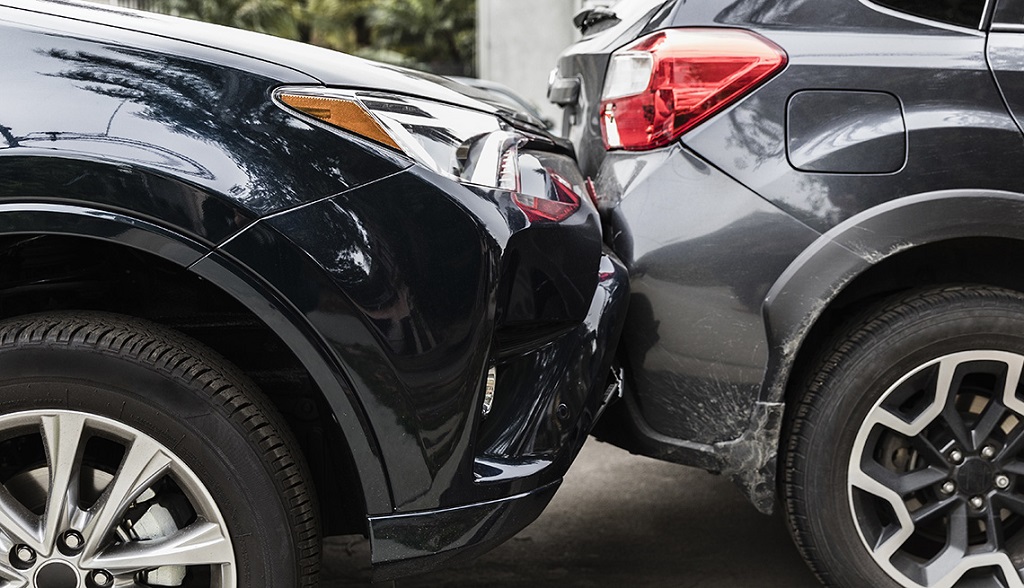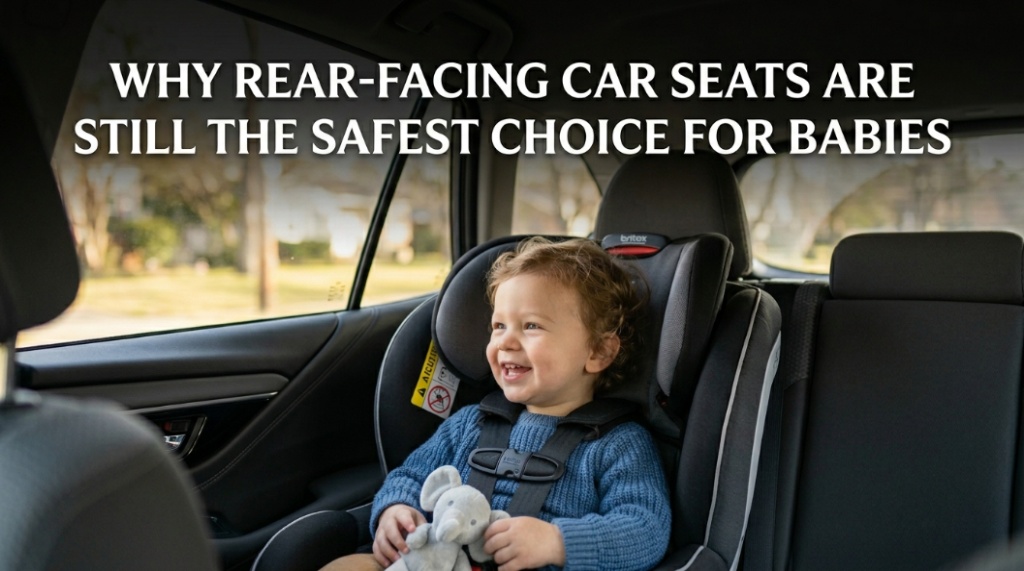
Imagine dropping a raw egg into a padded box. If the egg faces the direction of impact, the shell takes most of the force. Turn it backward, and the entire box absorbs the shock instead. That same principle explains why rear-facing car seats for babies remain the safest option during vehicle crashes. In a collision, a rear-facing seat distributes crash forces across a child’s head, neck, spine, and torso instead of concentrating them on vulnerable areas.
Parents often wonder when it is safe to turn a child’s car seat forward-facing. While many children look ready long before they actually are, crash research consistently shows that remaining rear-facing significantly reduces the risk of serious injury. The youngest passengers have proportionally larger heads, weaker neck muscles, and developing spinal structures that need maximum protection.
Definition: A rear-facing car seat is a child restraint system installed facing the back of the vehicle, designed to protect infants and toddlers by supporting the head, neck, and spine during sudden stops or crashes.
The problem is simple: many parents transition too early. The agitation is even greater because most serious crash injuries occur unexpectedly during routine trips close to home. Understanding the science behind rear-facing travel can help families make safer decisions and provide children with the highest level of protection every time they ride.
Why Are Rear-Facing Car Seats Considered the Safest Option for Babies?
Direct Answer: Rear-facing car seats are considered safest because they spread crash forces across the child’s entire back, protecting the head, neck, and spine during frontal and side-impact collisions.
Motor vehicle crashes remain one of the leading causes of injury among children. During a frontal crash, which accounts for many severe accidents, the vehicle stops suddenly while occupants continue moving toward the point of impact. Adults rely on seat belts and airbags, but babies require specialized protection because their bodies are still developing.
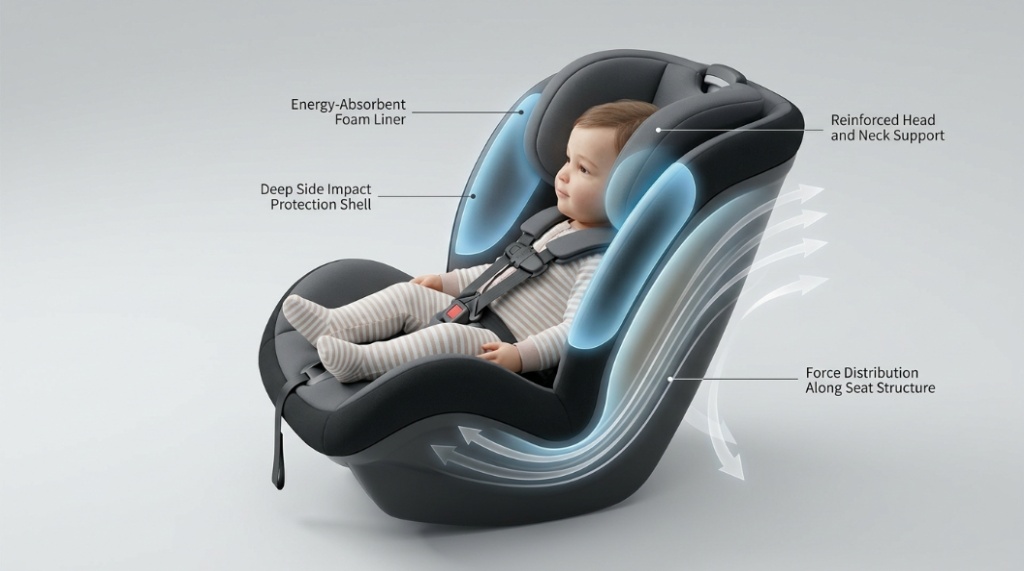
In a rear-facing position, the shell of the seat cradles the child and absorbs much of the collision force. This design minimizes stress on the cervical spine and significantly lowers injury risk compared to forward-facing restraints.
Vehicle safety technologies continue to evolve, and understanding systems such as electronic stability and vehicle dynamic control systems can help parents appreciate how multiple safety features work together to prevent accidents and protect passengers.
- Supports the head and neck during impact
- Distributes crash energy across the entire body
- Reduces spinal cord stress
- Provides better side-impact protection
- Offers superior protection for infants and toddlers
How Does a Rear-Facing Car Seat Protect a Baby During a Crash?
Direct Answer: A rear-facing seat acts like a protective cocoon, allowing the seat shell to absorb crash energy while supporting the baby’s entire body.
When a vehicle suddenly decelerates, the forces involved can be enormous. An infant’s head can represent nearly one-quarter of total body weight, making neck injuries a major concern in collisions.
In a forward-facing seat, the child’s body is restrained by the harness while the head moves forward, placing significant strain on the neck. In contrast, a rear-facing seat keeps the head, neck, and torso aligned throughout the crash sequence.
This protective design:
- Limits excessive head movement
- Reduces neck extension
- Protects the spinal column
- Improves overall crash energy management
- Maintains natural body alignment
Crash test simulations repeatedly demonstrate that rear-facing seats reduce dangerous loads on the neck and spine compared with forward-facing alternatives.
What Is Extended Rear-Facing and Why Do Experts Recommend It?
Direct Answer: Extended rear-facing means keeping children rear-facing beyond infancy until they reach the height or weight limits specified by the car seat manufacturer.
Many modern convertible car seats allow children to remain rear-facing well beyond their second birthday. Pediatric safety experts increasingly support extended rear-facing because developmental vulnerabilities continue long after infancy.
Contrary to popular myths, children do not need to face forward simply because their legs touch the vehicle seat. Young children are naturally flexible and often sit comfortably with crossed or bent legs.
Benefits of extended rear-facing include:
- Enhanced protection for the neck and spine
- Reduced risk of severe head injuries
- Improved crash force distribution
- Greater overall occupant protection
- Alignment with current child passenger safety recommendations
Parents should always follow manufacturer limits rather than age alone when determining when to transition.
Does Extended Rear-Facing Increase Leg Injury Risk?
Direct Answer: No. Research has not shown an increased risk of leg injuries for rear-facing children compared with forward-facing children.
Many caregivers worry that folded legs may be uncomfortable or dangerous. However, lower-extremity injuries among rear-facing children are uncommon. Serious injuries are more likely to involve the head, neck, or spine when children are turned forward too soon.
Children naturally reposition themselves and often find comfortable seating arrangements even in compact vehicles.
When Should a Child Switch from Rear-Facing to Forward-Facing?
Direct Answer: A child should switch only after exceeding the rear-facing height or weight limit listed by the car seat manufacturer.
Age alone should never determine readiness for forward-facing travel. Modern car seats are engineered with specific safety limits based on extensive testing.
Parents should routinely check:
- Maximum rear-facing weight limit
- Maximum rear-facing height limit
- Harness fit and positioning
- Installation angle requirements
- Manufacturer instructions
Families researching safe child restraints can also review this detailed guide to choosing the right baby car seat for long-term protection and legal compliance before purchasing a new model.
Transitioning too early reduces the protection available during a crash. Remaining rear-facing until limits are reached maximizes safety benefits.
What Is the Safest Car Seat Position Inside a Vehicle?
Direct Answer: The safest car seat position is generally the rear seat, preferably the center seating position when proper installation is possible.
The phrase safest car seat position often generates confusion among parents. While every vehicle differs, child passenger safety experts generally recommend the back seat for all children.
The center rear seat may provide additional distance from potential side impacts. However, a correctly installed seat on either outboard rear position is safer than an improperly installed seat in the center.
| Seating Position | Safety Advantage | Important Consideration |
|---|---|---|
| Center Rear | Maximum distance from side impacts | Must allow secure installation |
| Rear Passenger Side | Convenient loading and monitoring | Ensure proper installation |
| Rear Driver Side | Easy access in some vehicles | Requires correct harness adjustment |
| Front Seat | Not recommended for children | Airbag risks increase injury potential |
Regardless of location, correct installation remains the most important factor in overall safety.
Are Rear-Facing Car Seats Safer in Side-Impact Collisions?
Direct Answer: Yes. Rear-facing seats generally offer enhanced protection during side-impact crashes by supporting the head, neck, and torso within the seat shell.
Side-impact crashes can be particularly dangerous because less vehicle structure exists between passengers and the point of impact.
Rear-facing seats help by:
- Keeping the child’s body contained
- Reducing lateral movement
- Supporting the head and neck
- Distributing forces more evenly
- Working alongside side-impact protection features
Many premium convertible seats now incorporate advanced side-impact technologies, reinforced shells, and energy-absorbing materials to further improve protection.
What Common Mistakes Reduce Rear-Facing Car Seat Safety?
Direct Answer: The most common mistakes include loose installation, incorrect harness positioning, bulky clothing, and turning children forward-facing too early.
Even the highest-rated car seat cannot perform properly if used incorrectly. Studies consistently find installation errors among a significant percentage of child restraints.
Common Installation Errors
- Harness straps positioned incorrectly
- Loose seat belt or LATCH attachment
- Improper recline angle
- Chest clip placed too low
- Using expired or damaged seats
- Allowing excessive harness slack
How Tight Should the Harness Be?
Direct Answer: The harness should be snug enough that you cannot pinch excess webbing at the child’s shoulder.
A properly fitted harness keeps the child securely positioned during sudden vehicle movements while maintaining comfort for everyday travel.
Why Do Pediatricians and Safety Organizations Support Rear-Facing Travel?
Direct Answer: Pediatricians and safety organizations support rear-facing travel because decades of crash data demonstrate superior protection for young children.
Child passenger safety recommendations are based on biomechanics, injury research, crash testing, and real-world collision outcomes.
Experts emphasize that:
- Young spines are still developing
- Neck muscles cannot withstand adult-level forces
- Head-to-body proportions increase injury risk
- Rear-facing seats reduce the likelihood of severe injury
- Longer rear-facing use improves overall safety outcomes
These recommendations continue to influence child passenger safety laws, manufacturer guidelines, and public education campaigns worldwide.
How Can Parents Make Rear-Facing Travel More Comfortable for Toddlers?
Direct Answer: Parents can improve comfort by adjusting seat settings correctly, providing age-appropriate entertainment, and ensuring proper harness fit.
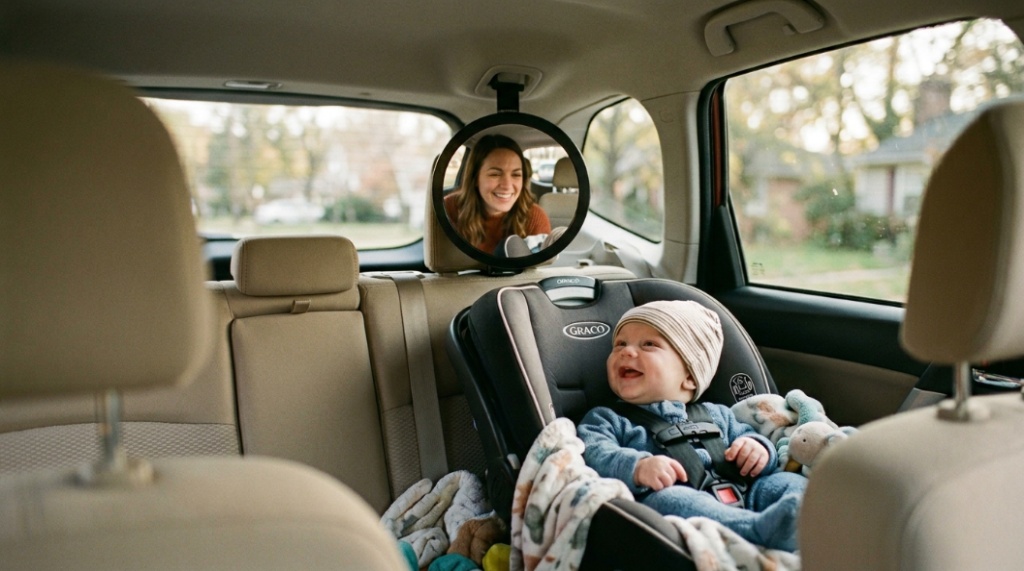
Comfort concerns are common but usually manageable. Most toddlers adapt quickly to rear-facing travel when the seat is installed correctly.
- Follow manufacturer recline instructions
- Dress children in thin, comfortable layers
- Use approved accessories only
- Provide books or travel toys
- Schedule breaks during long trips
- Maintain proper cabin temperature
A comfortable child is more likely to remain properly positioned throughout the journey, improving both safety and convenience.
Conclusion: Why Should Parents Keep Children Rear-Facing as Long as Possible?
Direct Answer: Keeping children rear-facing until they reach manufacturer limits provides the highest level of protection for the head, neck, and spine during a crash.
Rear-facing travel is not merely a recommendation—it is one of the most effective safety decisions parents can make. From infancy through toddlerhood, rear-facing seats distribute crash forces more effectively, reduce injury risks, and support developing anatomy during the moments that matter most.
Understanding concepts such as proper installation, extended rear-facing, and selecting the safest car seat position empowers families to make informed choices every time they travel. Parents seeking additional guidance on selecting the right restraint system can review this comprehensive resource covering safe baby car seat options and essential buying considerations.
The safest strategy is simple: keep children rear-facing until they outgrow the manufacturer’s rear-facing limits, verify installation regularly, and stay updated on current safety recommendations. Small decisions today can provide life-saving protection tomorrow.
Frequently Asked Questions (FAQ)
Is rear-facing safer than forward-facing?
Answer: Yes. Rear-facing seats provide better protection for a child’s head, neck, and spine by distributing crash forces across the entire back of the seat.
How long should a child stay rear-facing?
Answer: Children should remain rear-facing until they reach the maximum rear-facing height or weight limit established by the car seat manufacturer.
Can a toddler sit comfortably with bent legs in a rear-facing seat?
Answer: Yes. Toddlers naturally sit cross-legged or with bent knees and generally remain comfortable while rear-facing.
What is the safest car seat position in a vehicle?
Answer: The rear seat is safest, with the center position often preferred if the car seat can be installed securely according to manufacturer instructions.
Do rear-facing seats help in side-impact crashes?
Answer: Yes. Rear-facing seats provide greater support around the head and torso, helping manage crash forces during side impacts.
Should I use bulky winter clothing under the harness?
Answer: No. Bulky clothing can create excess harness slack, reducing effectiveness during a crash. Dress children in thin layers and place blankets over the harness if needed.
When is a convertible car seat a good option?
Answer: Convertible seats are ideal for families planning extended rear-facing use because they typically offer higher rear-facing height and weight limits.