Fishing is a hobby that tends to collect clutter fast. Over time, hooks, lines, lures, rods, reels, and tackle boxes pile up everywhere. Your garage, shed, or spare room starts to feel cramped and chaotic. Finding what you need before a fishing trip becomes a frustrating task.
However, it does not have to stay that way. With the right approach, you can bring order to your fishing gear without giving up the things you love. This article will guide you through the entire process. You will learn how to sort, reduce, and store your accessories in a way that actually lasts.
Why Fishing Gear Accumulates So Quickly
Most anglers accumulate gear for a simple reason. Every season brings new products, new techniques, and new temptations. A new lure style gets popular, and you buy a set. A sale on bobbers is hard to resist. Before long, you have multiples of everything.
Additionally, fishing gear has a long lifespan. Unlike food or clothing, old hooks and sinkers do not expire. So nothing gets thrown away. Items sit in drawers, boxes, and bags for years. The collection just keeps growing.
Therefore, the first step to solving the problem is understanding it. You are not just messy. You are dealing with gear that multiplies naturally over time. Recognizing this makes the solution easier to design.
Start with a Full Inventory
Before you organize anything, pull everything out. Yes, everything. Spread your fishing accessories across a flat surface where you can see them all at once. This step is essential because it reveals the true scale of what you own.
Sort items into broad categories first. Hooks go in one pile. Lures go in another. Lines, weights, floats, tools, and clothing each get their own group. Do not skip this step. It takes time, but it makes every decision easier going forward.
Once everything is sorted, you will likely notice duplicates and items you forgot you owned. This is normal. However, it is also your opportunity to make honest decisions about what you actually use.
Apply the Keep, Donate, and Discard Method
This three-part system is one of the most effective home cleaning tips for any type of clutter. It works especially well for fishing gear. Go through each category you sorted and make a decision for every item.
Keep
Keep only the items you have used in the past two years. If you cannot remember the last time you reached for it, that is a strong signal. Keep gear that is in good condition and suited to the type of fishing you currently do.
Donate
Gear that is still usable but no longer needed by you can help someone else. Youth fishing programs, community centers, and local clubs often welcome donated tackle. This is a much better outcome than letting good gear rot in a box.
Discard
Rusty hooks, tangled lines, cracked lures, and broken reels should go. Damaged gear is not just useless. It can also be dangerous. Additionally, it takes up space that could be used far more productively.
Embrace Minimalist Storage for Fishing Accessories
Once you have pared down your collection, the next step is storing what remains efficiently. Minimalist storage is not about owning as little as possible. It is about giving every item a clear, logical home so you can find it without searching.
Here are some practical ideas that work well for fishing gear:
- Use a modular tackle box system. Choose boxes where individual compartments can be rearranged or removed. This lets your storage evolve as your gear changes.
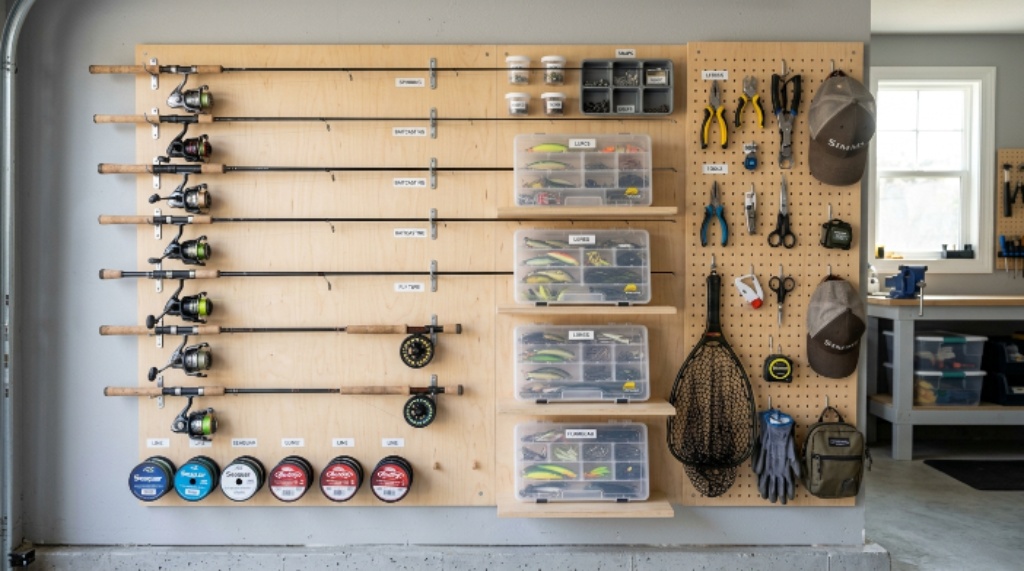
- Install wall-mounted rod holders in your garage or shed. Rods leaning against walls get tangled and damaged. Vertical or horizontal wall mounts keep them safe and off the floor.
- Use labeled, clear bins for bulkier items like waders, nets, and vests. Clear containers let you see the contents without opening every box.
- Hang a pegboard in your workspace to store tools, pliers, and small accessories. Pegboards are flexible, affordable, and keep things visible and accessible.
- Use a dedicated bag or backpack for day trips. Pack only what you need for specific outings rather than carrying your entire collection.
Organize by Fishing Type and Frequency
Not all fishing is the same, and your storage should reflect that. Organize your gear by the type of fishing you do most. Freshwater and saltwater gear have different needs. Fly fishing equipment differs completely from bass fishing tackle.
Additionally, think about frequency. Store the gear you use most in the easiest-to-reach spots. Items you only use a few times a year can go higher up or further back. This simple shift saves enormous amounts of time before every trip.
Therefore, group your items into three zones: everyday access, seasonal access, and rarely used. This zone system is one of the most underrated home cleaning tips you can apply to any hobby space.
Tackle the Tackle Box Properly
The tackle box deserves its own attention. It is often the most chaotic item in any angler’s collection. Lures of all sizes, loose hooks, tangled leaders, and forgotten accessories mix together into a difficult mess.
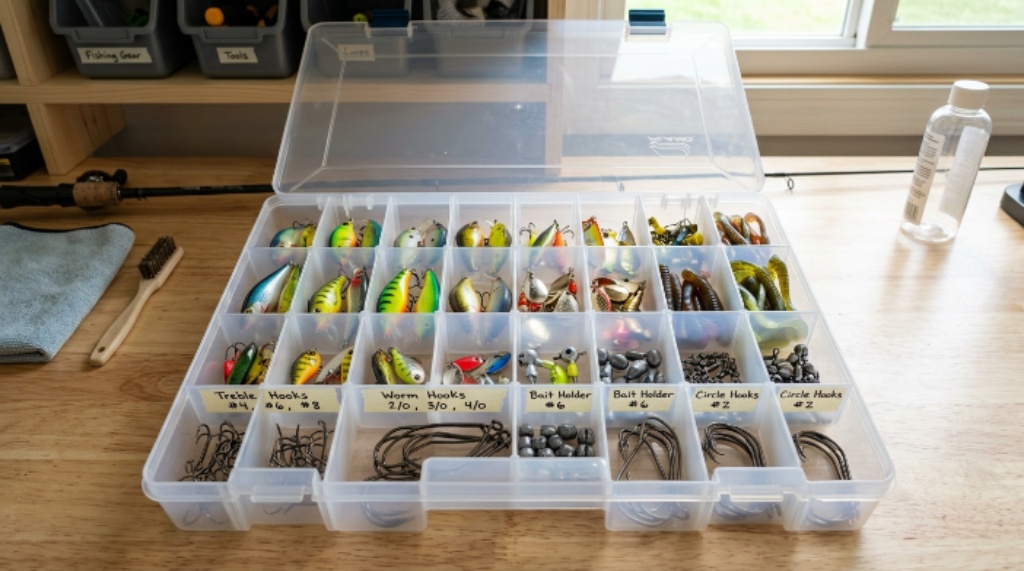
Start by emptying it completely. Wipe the inside clean. Then restock it intentionally. Place only what you need for your most common type of fishing. Use small zip-lock bags or foam inserts to keep tiny items separated.
Additionally, label each compartment if you have a large box. A small piece of tape and a marker is all you need. Labels eliminate guesswork and help you restock correctly after each trip.
Consider owning one tackle box per fishing style if you fish in multiple ways. A smaller, purpose-built box is far easier to manage than one large box trying to do everything.
Maintain Your System with a Simple Routine
Decluttering once is not enough. Without a maintenance routine, clutter returns. The good news is that keeping a fishing space tidy takes very little time if you build the right habits.
After every fishing trip, spend ten minutes resetting your gear. Return items to their designated spots. Rinse saltwater gear. Check for damage. Restock anything you used up. These small actions prevent big messes from forming.
Additionally, do a seasonal review of your gear twice a year. Once before the main fishing season and once after. Remove anything that has broken or is no longer useful. This keeps your minimalist storage system working all year round.
Therefore, the goal is not perfection. The goal is a consistent, low-effort habit that keeps your space functional and enjoyable.
Involve the Whole Household
If fishing gear spills into shared spaces, other family members are affected too. A garage full of tackle is not just your problem. It becomes a household issue. Therefore, involving others in the solution makes sense.
Explain your system to anyone who shares the space. Show them where things go. Make it easy for them to understand the zones you have created. A system that only you understand is fragile.
Additionally, if you have children who fish, teach them the same habits early. A child who learns to return gear to its place after a trip grows into an adult who never has to spend a weekend decluttering.
Conclusion
Decluttering fishing accessories is a satisfying project with real, lasting benefits. It saves you time before every trip. It protects your gear from damage. It also makes your home or storage space feel calmer and more organized.
The process starts with a full inventory and honest sorting. From there, the keep, donate, and discard method helps you make clear decisions. After that, thoughtful minimalist storage ensures everything has a home it can always return to.
Finally, a simple maintenance routine keeps the system alive. Spend a few minutes after each trip and do a seasonal review twice a year. These small habits make a big difference. Your future self will thank you every time you head out for a day on the water.
Frequently Asked Questions
1. How do I store fishing rods without taking up too much space?
Wall-mounted rod holders are the most space-efficient solution. You can mount them horizontally or vertically depending on your ceiling height. Ceiling-mounted racks also work well in garages. They keep rods off the floor, reduce tangling, and free up significant floor space.
2. What should I do with old fishing lures I no longer use?
If the lures are still in good condition, donate them to a local youth fishing program or a community center. You can also sell them through online marketplaces or at a garage sale. Lures that are cracked, rusted, or badly faded should be discarded responsibly.
3. How often should I declutter my fishing gear?
A full declutter once a year is usually enough for most anglers. However, a quick review at the start and end of each fishing season helps prevent buildup. Additionally, spending ten minutes resetting your gear after each trip keeps daily clutter from accumulating.
4. What is the best way to organize a tackle box?
Start by emptying the box completely and cleaning it. Then restock it by fishing type or target species. Use small dividers or zip-lock bags to separate tiny items like hooks and swivels. Label compartments if your box is large. Only include what you actually need for your most common fishing trips.
5. Can I apply these decluttering tips to other hobby spaces?
Absolutely. The inventory, sort, and zone method works for any hobby that involves lots of small items. Woodworking tools, crafting supplies, and gardening gear all respond well to the same approach. The key principle is the same in every case: give every item a clear, permanent home.
Related Topics:
How to Choose Essential Surfboard Accessories for Beginners
Essential Homemade Pasta Tools: Cuisinart 5‑Piece Pasta Maker Set