Budget airlines have changed the way millions of people travel. They offer incredibly low ticket prices. However, those savings can disappear fast if you choose the wrong bag. Extra baggage fees can sometimes cost more than the ticket itself.
The good news is that avoiding these fees is entirely possible. You just need to know what to look for before you buy a backpack. This guide will walk you through everything you need to consider. By the end, you will feel confident choosing a bag that fits the rules and keeps your wallet happy.
Why Your Backpack Choice Matters More Than You Think
Most budget airlines allow one small personal item for free. This is usually a backpack or a small bag that fits under the seat in front of you. If your bag is even slightly too large, the airline may charge you at the gate. Those gate fees are often the highest charges of all.
Therefore, choosing the right backpack is not just about style or storage. It is a financial decision. The right bag can save you a significant amount of money on every single trip. Additionally, a well-chosen backpack makes your journey smoother and more comfortable from start to finish.
Understanding Cheap Airline Baggage Rules
Before you buy anything, you need to understand how budget airlines handle bags. Each airline has its own size and weight limits. These limits vary more than most travelers expect.
For example, Ryanair, Spirit, EasyJet, and Wizz Air all have different measurements for their free personal item allowance. Some allow bags up to 40 x 20 x 25 cm. Others are slightly more generous. However, none of them will make exceptions at the gate if your bag does not fit.
Cheap airline baggage rules are strictly enforced, especially at busy airports. Staff often use metal sizing boxes to check bags before boarding. If your bag does not fit inside the box, you will pay a fee on the spot. That is why knowing these rules before you shop is absolutely essential.
The safest approach is to check the baggage policy of the airline you fly most often. Then use those exact dimensions as your shopping guide. A backpack that fits one airline may be too large for another.
Key Features to Look for in a Budget-Friendly Travel Backpack
The Right Size and Dimensions
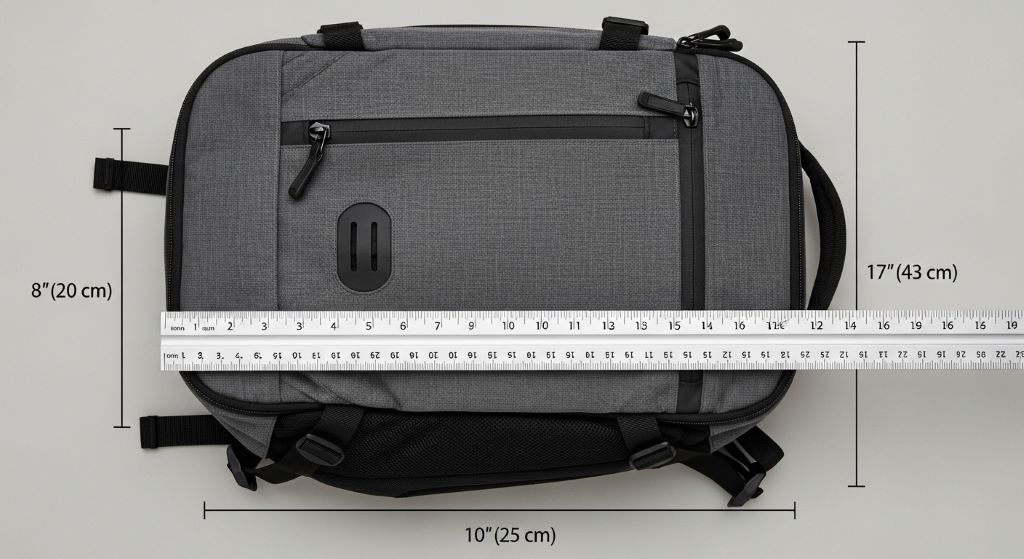
Size is the single most important factor. Look for a backpack that measures no more than 40 x 20 x 25 cm, or close to that range. Many travel backpack brands now design bags specifically for budget airline restrictions.
Pay attention to the total dimensions when the bag is fully packed. Some backpacks look small when empty but expand significantly when filled. Avoid bags with external frames or protruding parts that could add unexpected bulk. A slim, streamlined profile is always your best option.
Lightweight Construction
Weight matters for two reasons. First, some airlines have a weight limit even for personal items. Second, a lighter bag means you can pack more without going over the limit. Therefore, look for backpacks made from lightweight materials like nylon or ripstop polyester.
Avoid heavy canvas bags or leather options for air travel. They add unnecessary weight before you even pack a single item. A good travel backpack should weigh no more than 0.5 to 0.8 kilograms on its own.
Smart Organization and Compartments
A well-organized backpack helps you pack efficiently. This is important because you will be carrying everything in one small bag. Look for a design that has multiple internal compartments, including a dedicated laptop sleeve if you travel with one.
External pockets are useful too. However, make sure they do not push the bag beyond its allowed dimensions. Side pockets that lay flat against the bag are a smarter choice than ones that stick out. Additionally, a front panel that opens completely flat makes packing and unpacking much easier at security checkpoints.
Comfort and Wearability
You will likely carry this bag through airports, city streets, and up stairwells. Therefore, comfort is not a luxury — it is a necessity. Look for padded shoulder straps that are wide enough to distribute weight evenly.
A breathable back panel is also helpful, especially in warm climates. Hidden or tuck-away hip straps are a great feature. They give extra support when needed but stay hidden when you do not want them. Some backpacks also have a sternum strap, which helps balance the load across your chest.
Durable Materials and Zippers
Your backpack will go through a lot of wear and use. Therefore, materials and build quality matter greatly. Choose a bag made from water-resistant fabric. Travel days are unpredictable, and a little rain should not ruin your belongings.
Pay special attention to the zippers. Cheap zippers break easily and can leave your bag open at the worst possible moment. Look for YKK zippers or similarly reputable brands. They are smoother, more durable, and far more reliable over time.
How to Pack a Small Backpack Without Sacrificing Essentials
Packing light is a skill. The good news is that anyone can learn it with a little practice. The first step is to make a list of everything you think you need. Then cut that list by at least one third.
Roll your clothes instead of folding them. Rolling saves space and reduces wrinkles at the same time. Use compression bags for bulkier items like sweaters or jackets. These bags squeeze out excess air and dramatically reduce the space clothing takes up.
Pack your heaviest items closest to your back. This keeps the bag balanced and reduces strain on your shoulders. Additionally, use every small pocket and gap to tuck in socks, charger cables, or small accessories.
Choose versatile clothing that works for multiple occasions. A neutral-colored shirt can be worn in the day and dressed up at night. Therefore, you do not need as many items as you think. The goal is to have exactly what you need and nothing more.
Avoiding Hidden Fees on Budget Airlines
Baggage fees are not the only extra charges to watch for. Budget airlines often charge for everything separately. Seat selection, priority boarding, and even printing your boarding pass can cost extra. However, your biggest risk is almost always at the baggage drop or gate.
The best strategy for low-cost travel is to prepare thoroughly before you arrive at the airport. Check in online as early as possible. Download your boarding pass to your phone. Measure and weigh your bag at home before you leave.
If you are close to the size limit, pack your bag and then press it firmly on all sides. A good travel backpack is flexible enough to compress slightly if needed. This small trick can make the difference between passing the sizing check and paying a gate fee.
Additionally, wear your heaviest items on the plane if you are worried about weight. A heavy jacket, boots, or jeans worn during the flight free up significant space and weight inside your bag.
Best Types of Backpacks for Budget Air Travel
The Classic 20-Liter Daypack
A 20-liter daypack is often the ideal size for budget airline personal items. It is large enough to hold a few days worth of clothing but small enough to fit most airline requirements. These bags are widely available at many price points.
Look for one with a laptop compartment if you travel with a computer. Many 20-liter daypacks now include this feature without adding extra bulk. Furthermore, this size is comfortable enough to wear all day while sightseeing, which makes it a great all-purpose travel companion.
The Slim Laptop Backpack
A slim laptop backpack is another excellent choice. These bags are designed to look professional but are sized for practicality. They often fit within personal item dimensions and have organized internal layouts perfect for travel.
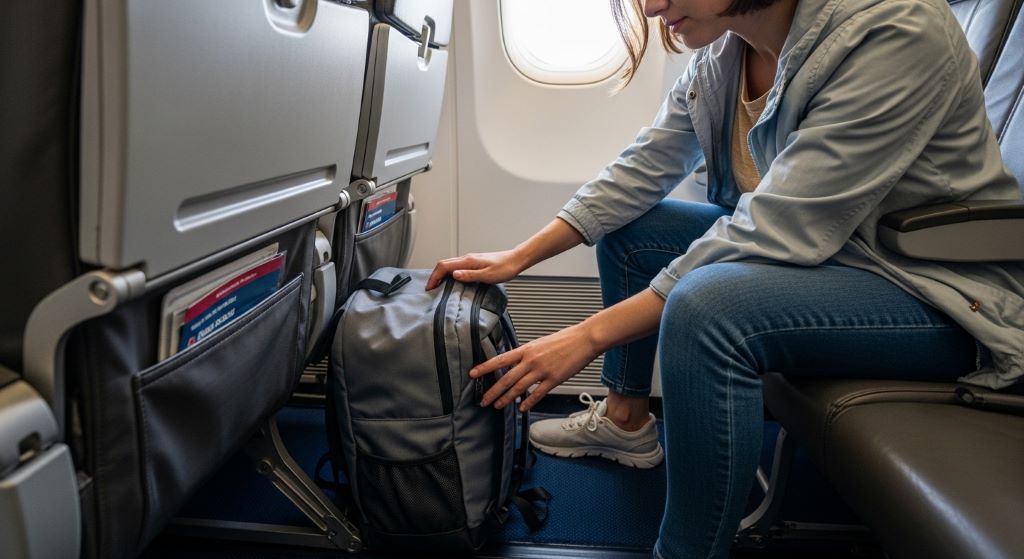
The slim profile means they slide easily under the seat in front of you. This is important because budget airlines often have less overhead bin space than traditional carriers. Having a bag that fits under the seat guarantees your carry-on is always within reach.
The Packable Backpack
A packable backpack is a smart secondary option. These bags fold down into a tiny pouch when not in use. You can pack one inside your main bag and use it for day trips once you arrive at your destination.
However, packable backpacks are generally not sturdy enough to be your sole travel bag on a flight. They are best used as a bonus item rather than your primary carry-on. Think of them as a flexible extra that adds versatility to your trip without any additional cost.
Tips for Measuring Your Backpack Correctly
Many travelers measure their backpacks incorrectly. This leads to unpleasant surprises at the airport. Here is how to do it right.
First, pack your bag as you would for a real trip. An empty bag will always measure smaller than a full one. Second, measure the bag at its widest points, including any side pockets, buckles, or bulges.
Use a soft tape measure for accuracy. Measure the height from the bottom of the bag to the top of the highest point, including the handle if there is one. Measure the width at the widest point, and the depth from front to back at the thickest section.
If your measurements are close to the airline limit, consider leaving one or two items behind. That extra pair of shoes or thick book is rarely worth a gate fee.
A Note on Low-Cost Travel and Mindset
Low-cost travel is not about suffering or going without. It is about being smart with your choices. When you choose the right backpack, you remove one of the biggest stressors of budget airline travel entirely.
You arrive at the airport confident. You board without stress. You save money that you can spend on experiences at your destination instead. Furthermore, traveling with less is genuinely liberating. Many seasoned travelers say that once they learned to pack light, they never went back.
Conclusion
Choosing the right backpack for budget airlines takes a little research and preparation. However, the effort is absolutely worth it. Start by checking the specific cheap airline baggage rules for the carriers you fly most often. Then look for a backpack that fits within those dimensions and is made from lightweight, durable materials.
Focus on smart organization, comfortable straps, and reliable zippers. Pack thoughtfully by rolling clothes, choosing versatile items, and leaving behind anything you do not truly need. With the right bag and the right mindset, low-cost travel becomes a genuinely enjoyable experience.
You can fly farther, more often, and without the financial stress that comes from unexpected fees. The right backpack is your first step toward smarter, cheaper, and more confident travel.
Frequently Asked Questions
What size backpack is allowed as a free personal item on most budget airlines?
Most budget airlines allow a personal item measuring around 40 x 20 x 25 cm, though this varies by carrier. Always check the specific airline’s website before you fly. Dimensions are strictly enforced, especially at the gate during busy periods.
Can I bring both a backpack and a small purse on a budget airline for free?
This depends entirely on the airline. Some carriers allow one personal item only. Others may permit a small handbag in addition to your backpack. Check the baggage policy carefully before packing, as the rules differ significantly from one airline to another.
What happens if my backpack is too big at the gate?
If your bag does not fit the airline’s sizing gauge, you will typically be charged a gate fee. These fees are usually higher than fees paid in advance online. To avoid this, measure your packed bag at home and compare it to the airline’s listed dimensions before you leave.
Are there backpacks specifically designed for budget airline travel?
Yes, several brands now make backpacks designed to meet common budget airline size restrictions. Brands like Cabin Max, Osprey, and Tortuga offer bags built around these dimensions. Reading recent customer reviews from travelers who have used these bags on specific airlines is a good way to verify real-world fit.
How can I pack a week’s worth of clothes in a small personal item backpack?
It is possible with the right strategy. Roll your clothes to save space. Choose lightweight, quick-dry fabrics that take up less room. Select neutral colors that mix and match easily. Use compression bags for bulky items. Wear your heaviest clothing on travel days to free up space inside the bag.
Related Topics:
What is a Travel Nurse? Exploring the of Travel Nursing.