Choosing the right woodworking nail gun can make the difference between a smooth project and hours of frustration. Many beginners assume that any nail gun will work for woodworking, but the reality is different. Different woodworking tasks require different nail sizes, power levels, and tool designs.
According to industry data from the U.S. Bureau of Labor Statistics, over 35% of carpentry-related injuries involve improper tool handling. Often, the problem starts with using the wrong tool for the job. A nail gun designed for framing may split delicate trim pieces, while a finishing nailer may not have enough power for structural work.
In simple terms, the best woodworking nail gun is the one that matches your specific project—whether you are building cabinets, installing trim, or assembling furniture. Professional carpenters rely on several types of carpentry tools, each optimized for different tasks.
This guide explains how to choose the right nail gun for woodworking projects. You will learn the different types of nail guns, key features to consider, real-world usage examples, and practical buying tips used by professional woodworkers.
What Is a Woodworking Nail Gun and Why Do Woodworkers Use It?
Short answer: A woodworking nail gun is a power tool that drives nails into wood quickly and accurately, replacing manual hammering for efficiency and consistency.
A nail gun, also called a nailer, is one of the most essential carpentry tools used in modern woodworking. Instead of hammering nails manually, the tool drives nails using compressed air, battery power, or gas cartridges.
This offers several advantages:
- Faster assembly of wood pieces
- More precise nail placement
- Less physical fatigue
- Cleaner and more professional results
Professional woodworking shops use nail guns to assemble cabinets, attach moldings, build frames, and install panels. DIY woodworkers also rely on them for home projects like shelving, furniture building, and small carpentry repairs.
A case study by the Woodworking Network showed that replacing hammer work with pneumatic nailers can improve productivity by up to 40% in small woodworking shops.
However, choosing the wrong nail gun can damage materials or lead to weak joints. That is why understanding different nail gun types is critical before buying one.
What Are the Main Types of Nail Guns for Woodworking?
Short answer: The four most common nail guns for woodworking are brad nailers, finish nailers, pin nailers, and framing nailers.
Each type of nail gun serves a specific purpose. Using the correct one ensures better results and prevents wood damage.
| Nail Gun Type | Nail Size | Best For | Typical Projects |
|---|---|---|---|
| Pin Nailer | 23 gauge | Delicate woodworking | Small trim, decorative pieces |
| Brad Nailer | 18 gauge | Light woodworking | Trim, small furniture |
| Finish Nailer | 15–16 gauge | Medium carpentry | Cabinetry, molding |
| Framing Nailer | 10–12 gauge | Structural carpentry | Wall framing, deck building |
For most woodworking tasks, professionals recommend starting with an 18-gauge brad nailer. It provides enough holding strength without damaging wood surfaces.
Which Nail Gun Is Best for Furniture and Fine Woodworking?
Short answer: An 18-gauge brad nailer or 23-gauge pin nailer is best for furniture and delicate woodworking projects.
Furniture building requires precision and minimal surface damage. Thick nails can split thin wood panels or leave visible holes.
Brad Nailers (18 Gauge)
Brad nailers are the most common woodworking nail gun used by hobbyists and professionals.
- Ideal for softwoods and thin hardwood
- Leaves small nail holes
- Good holding power for trim pieces
Typical uses include:
- Furniture assembly
- Cabinet backs
- Baseboards
- Wood panels
Pin Nailers (23 Gauge)
Pin nailers use extremely thin nails and are perfect for delicate work.
- Minimal hole visibility
- No wood splitting
- Ideal for decorative trim
However, pin nails have limited holding strength and are often used with wood glue.
Should You Choose a Pneumatic or Cordless Nail Gun?
Short answer: Pneumatic nail guns are lighter and cheaper, while cordless nail guns offer mobility and convenience.
This is one of the biggest decisions when choosing carpentry tools.
Pneumatic Nail Guns
Pneumatic nailers use compressed air from an air compressor.
Advantages:
- Lighter weight
- Lower tool cost
- Consistent firing power
Disadvantages:
- Requires compressor and hose
- Less portable
Cordless Nail Guns
Cordless nail guns run on rechargeable batteries and internal gas systems.
Advantages:
- No air compressor needed
- Easy portability
- Good for home workshops
Disadvantages:
- Heavier tool weight
- Higher purchase price
Many professional woodworkers keep both options depending on project requirements.
What Features Should You Look for in a Woodworking Nail Gun?
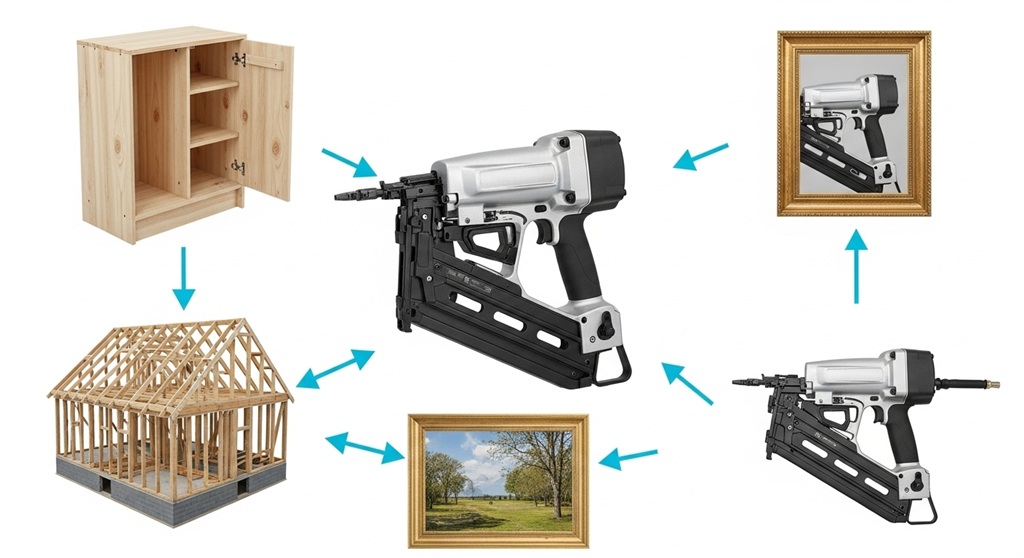
Short answer: The most important nail gun features include adjustable depth, nail capacity, safety systems, and trigger modes.
Buying the right nail gun is not only about nail size. Several technical features affect performance and usability.
1. Depth Adjustment
Depth adjustment controls how deep nails penetrate wood surfaces. This prevents overdriving nails and damaging wood pieces.
2. Trigger Type
- Sequential trigger: safer and more precise
- Bump trigger: faster but requires experience
3. Magazine Capacity
A larger magazine means fewer reloads during large projects.
4. Jam Clearing Mechanism
Quick jam release saves time during woodworking tasks.
5. Weight and Ergonomics
Lightweight nail guns reduce fatigue during long projects.
According to contractor surveys by Remodeling Magazine, ergonomic weight distribution improves productivity by 18% during repetitive carpentry work.
What Nail Sizes Should You Use for Different Woodworking Projects?
Short answer: Nail size depends on wood thickness and project strength requirements.
| Project Type | Nail Size | Nail Gun |
|---|---|---|
| Picture frames | 23 gauge | Pin nailer |
| Cabinet trim | 18 gauge | Brad nailer |
| Door casing | 16 gauge | Finish nailer |
| Deck framing | 10–12 gauge | Framing nailer |
Choosing the correct nail length prevents weak joints and wood splitting.
What Safety Tips Should You Follow When Using a Nail Gun?
Short answer: Always use eye protection, disconnect power before maintenance, and keep your hands away from the firing area.
Nail guns are powerful tools. Improper use can cause serious injury.
The U.S. Centers for Disease Control reports that over 37,000 nail gun injuries occur annually in the construction industry.
Key safety rules include:
- Wear safety glasses
- Use sequential trigger mode for beginners
- Never point the nail gun toward people
- Disconnect power before clearing jams
- Keep fingers away from firing zones
Following these guidelines ensures safe woodworking operations.
How Much Does a Good Woodworking Nail Gun Cost?
Short answer: Most quality woodworking nail guns cost between $80 and $350 depending on type and power source.
| Tool Type | Average Price |
|---|---|
| Pin nailer | $80 – $150 |
| Brad nailer | $100 – $200 |
| Finish nailer | $150 – $300 |
| Cordless nailer | $250 – $350+ |
Professional carpenters often invest in multiple nail guns to handle different woodworking tasks.
Conclusion: How Do You Choose the Right Nail Gun for Your Woodworking Projects?
Choosing the best woodworking nail gun depends on the type of projects you plan to build. There is no single tool that works for every woodworking job. Furniture building, trim installation, cabinet work, and structural carpentry all require different nail sizes and tool power.
For most beginners and DIY woodworkers, an 18-gauge brad nailer is the most versatile starting point. It handles many woodworking tasks without damaging delicate materials. As your projects grow, adding a finish nailer or pin nailer can expand your capabilities.
Before buying a nail gun, consider the type of woodworking you do, the nail sizes required, and whether you prefer pneumatic or cordless tools. Investing in the right carpentry tools improves efficiency, safety, and final project quality.
If you are planning new woodworking projects, take time to evaluate your needs and choose the right nail gun carefully. The right tool will save time, reduce mistakes, and help you build stronger, cleaner woodwork.
Ready to upgrade your woodworking tools? Explore professional nail guns designed for carpentry and start building projects faster and more accurately.
Frequently Asked Questions (FAQs)
1. What is the best nail gun for beginner woodworkers?
The best nail gun for beginners is usually an 18-gauge brad nailer. It provides enough holding strength for common woodworking tasks such as trim installation, cabinet assembly, and furniture building while leaving small nail holes.
2. Can you use a framing nailer for woodworking?
Framing nailers are designed for structural carpentry such as building walls or decks. They use large nails that may split thin wood materials, so they are generally not suitable for fine woodworking projects.
3. Is a compressor required for nail guns?
Only pneumatic nail guns require an air compressor. Cordless nail guns operate using battery power or gas cartridges, making them more portable for home workshops and mobile carpentry work.
4. What nail size is best for trim work?
Most trim work uses 18-gauge brad nails or 16-gauge finish nails depending on the thickness of the trim and required holding strength.
5. Are cordless nail guns powerful enough for woodworking?
Modern cordless nail guns provide enough power for most woodworking projects including trim installation and furniture assembly. However, pneumatic nailers may still offer better performance for heavy professional use.
6. How do you prevent wood from splitting when using a nail gun?
Use thinner nails such as brad nails or pin nails, avoid nailing too close to wood edges, and adjust the depth setting on the nail gun to prevent excessive penetration.
Read More Also: How to Choose Essential Surfboard Accessories for Beginners
Find out: How Do You Cast a Spinning Surf Rod Farther and More Accurately?