
How to Keep Gear Dry with a Waterproof Fishing Backpack
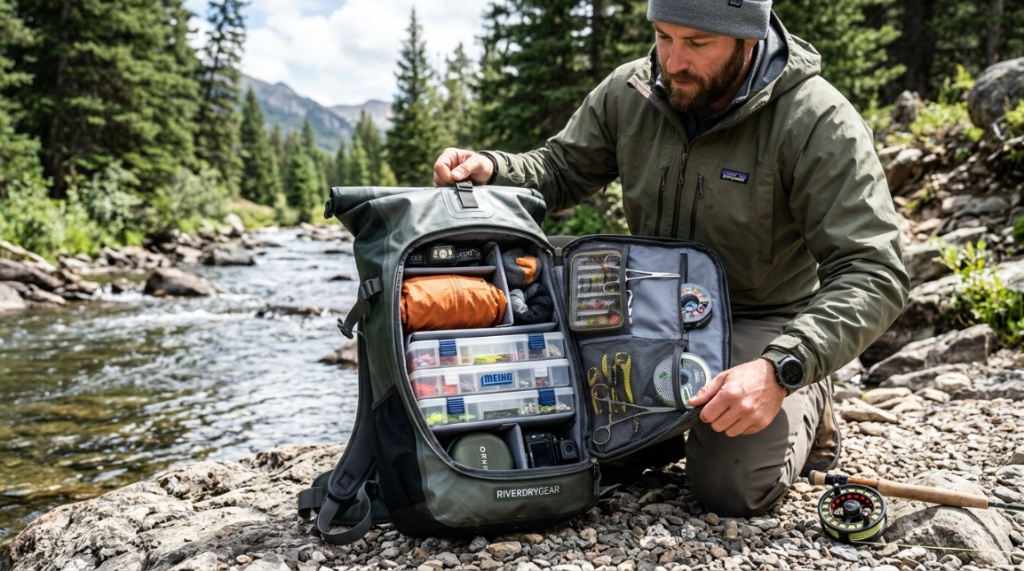
There’s nothing that kills a fishing trip faster than reaching into your pack to find your phone swimming in a puddle, your spare reel grinding with grit, or your sandwiches floating in a soupy mess. Wet gear isn’t just an inconvenience—it’s a safety hazard and a fast track to rusted tackle and ruined electronics. You planned for the weather, but your gear wasn’t prepared. The solution isn’t a garbage bag or a flimsy dry pouch; it’s investing in a dedicated waterproof fishing backpack designed to lock moisture out and organize your essentials.
This isn’t just another gear review. This is a practical, deep-dive guide on how to use an IPX-rated pack to its full potential, why fabric technology matters, and how to organize your load for maximum protection. Whether you’re wading a river, kayaking a lake, or battling salt spray from a pier, you need a system that keeps your critical items bone-dry. Let’s break down the best strategies, materials, and packing techniques so you never have to deal with soaked gear again.
What Makes a Fishing Backpack Truly Waterproof?
A truly waterproof backpack is not simply water-resistant. It is constructed with welded seams, waterproof zippers (or roll-top closures), and heavy-duty TPU or PVC-coated fabric. Water-resistant packs delay water ingress; waterproof packs prevent it entirely. Look for an IPX6 or IPX7 rating for submersion or high-pressure spray resistance.
Understanding IPX Ratings and Fabric Technology
IPX ratings are your first line of defense in choosing gear. An IPX6 rating means the pack can withstand powerful water jets, while IPX7 means it can be submerged in up to 1 meter of water for 30 minutes. For real-world fishing, an IPX6 is usually sufficient for rain and waves, but IPX7 offers peace of mind if you drop it overboard. Fabrics like 500D TPU-coated nylon or PVC tarpaulin are the industry standard—they are flexible, tear-resistant, and completely impermeable to water when sealed correctly.
However, remember that a backpack is only as waterproof as its weakest point—the zipper. Standard coil zippers leak. Look for packs with waterproof YKK Aquaseal zippers or those that use a fold-over roll-top design like a dry bag. The roll-top offers redundancy: even if the seal fails, the folded material prevents water penetration,Keeping your gear completely dry is only half the battle; staying organized on the water is just as crucial. To maximize your setup, make sure you explore how to properly arrange your Fishing Accessories and Save Space Easily so everything is within arm’s reach.
Roll-Top vs. Waterproof Zipper Systems
Roll-top closures mimic dry bag technology—you fold the top three times and clip it shut. This creates a 100% watertight seal as long as the fold is done correctly. They are bulkier but unforgivingly reliable. Waterproof zippers are more convenient, offering quick access, but they require regular cleaning to maintain their seal. If you prioritize speed of access while wading, zippers win; if you want absolute security for electronics, roll-tops win.
Why Not Just Use a Regular Dry Bag?
A dry bag protects your items, but it doesn’t organize your fishing gear. A dedicated waterproof fishing backpack integrates padded compartments, rod holders, and tackle organization systems that dry bags lack. Simply stuffing a dry bag inside a regular backpack doesn’t protect it from internal moisture (like leaking water bottles) or provide structural protection for delicate reels.
The Organizational Advantage of a Dedicated Pack
Fishing backpacks include dedicated slots for pliers, tools, and hydration bladders. They often have exterior attachment points for rods and nets. More importantly, they have internal padding that a dry bag doesn’t offer, protecting your gear from physical impacts during a hike to a remote spot. The structural frame of a backpack also distributes weight better, making long treks less fatiguing.
Comparing Waterproof Backpacks vs. Soft Coolers vs. Tackle Bags
Soft coolers are often waterproof, but they are heavy and provide limited organizational space. Tackle bags are great for boxes but lack the capacity for a rain jacket, lunch, or extra spools of line. A waterproof fishing backpack strikes the perfect balance: it carries heavy gear comfortably, organizes tackle boxes, and keeps clothing dry—all in one unit.
How to Choose the Right Waterproof Fishing Backpack for Your Needs
To choose correctly, first assess your environment: saltwater, freshwater, bank fishing, or kayak. Saltwater requires corrosion-resistant zippers and hardware that won’t rust. Kayak fishing demands a shorter, wider profile to fit in hatches. Bank anglers need backpack straps with great ventilation to avoid sweating in the heat.
Key Features: Capacity, Padding, and Compartments
Capacity is measured in liters. For a day trip, 20–30 liters is ideal. For multi-day excursions, 40+ liters is necessary. Padding matters for both the back panel (for comfort) and the interior (for laptop/tablet storage). Look for specialized compartments: a fleece-lined pocket for sunglasses, a tool organizer with elastic loops, and a leak-proof pocket for wet bait or caught fish.
| Feature | Why It Matters | What to Look For |
|---|---|---|
| Material | Durability and waterproofing | TPU-coated nylon or PVC tarpaulin |
| Closure | Seal integrity | Roll-top or YKK Aquaseal zippers |
| Back Padding | Comfort and airflow | Mesh-covered channeled foam |
| Attachment Points | Versatility | Molle webbing, rod holders, D-rings |
| Weight | Ease of carrying | Under 3 lbs (1.36 kg) for day packs |
Top Considerations for Saltwater vs. Freshwater Anglers
Saltwater anglers must prioritize corrosion resistance. Check that all buckles are stainless steel or plastic and that zippers are treated with a corrosion inhibitor. Freshwater anglers can afford lighter materials but should still look for UV resistance to prevent fabric degradation. If you’re fishing in Texas, where the sun is relentless and thunderstorms roll in fast, durability and waterproofing are non-negotiable. Look for a waterproof fishing backpack that can handle the intense heat and sudden downpours common in the Gulf Coast region.
Step-by-Step Guide: How to Pack a Waterproof Fishing Backpack
Packing a waterproof backpack correctly is just as critical as the backpack itself. If you fold a roll-top incorrectly, water will enter. Follow this 5-step process to ensure a watertight seal every time.
Step 1: Internal Organization with Dry Bags
Don’t rely solely on the backpack. Place critical electronics (phone, keys, battery packs) inside a small interior dry bag (5-10L) for double protection. This protects you from condensation and ensures your items remain dry even if you open the main compartment in heavy rain.
Step 2: Weight Distribution and Heavy Items
Place heavy items like tackle boxes near the top and close to your back. This lowers your center of gravity and prevents the pack from pulling you backward when wading. Soft items, like a rain jacket, go at the bottom to act as a cushion for the back panel.
Step 3: Sealing the Roll-Top Correctly
After filling, compress the air out of the main compartment to reduce buoyancy. Fold the top down 3 to 4 times towards the back, then clip the buckles. Ensure the folds are tight and even—a crooked fold is a guaranteed leak point.
Step 4: Managing External Attachments
Use exterior straps for wading boots, nets, or a small rod. Never store items that must remain dry in exterior pockets unless those pockets themselves are IPX-rated. Even then, use them for less critical items like a knife or multi-tool.
Step 5: The “ Shake Test”
Before you hit the water, do a quick shake test at home. Place a dry paper towel inside, seal the pack completely, and spray it with a high-pressure hose for 30 seconds. Then, open it and feel for any moisture. This takes two minutes and saves you from a disaster later.
How to Maintain and Clean Your Waterproof Backpack
Regular maintenance extends the life of your backpack and preserves its waterproof integrity. Salt crystals and fine sand are abrasive and will wear down zippers and welds. Your pack’s lifespan depends on how well you care for the seams, zippers, and outer coating.
Cleaning Salt, Sand, and Grime
After every saltwater trip, rinse the entire pack thoroughly with fresh water. Use a soft brush and mild soap (never detergent) to remove grime from the zippers. Open all compartments and let the pack air dry completely in the shade. Do not machine wash or dry, as this destroys the waterproof coatings and separates welded seams.
Re-waterproofing and Zipper Lubrication
Most TPU-coated fabrics do not need re-applying spray-on waterproofing. However, the zippers need dedicated, non-petroleum-based zipper lubricant (like Boeshield T-9 or Sea Drops) applied twice a month if used regularly. This prevents the zipper teeth from corroding and keeps them sliding smoothly. For PVC packs, treat the exterior with a UV protectant quarterly to prevent cracking.
Can a Waterproof Backpack Float? (Floating vs. Sinking Designs)
No, standard waterproof backpacks do not float. They are waterproof but generally filled with metal gear, making them sink quickly. Some pack designs incorporate internal air chambers or closed-cell foam to provide buoyancy, but these are rare and have reduced capacity. If you fall in, the waterproof seal will keep air in briefly, but the weight of tackle will pull you down.
Why Buoyancy Matters for Kayak and Wading
For kayak anglers, a floating backpack is a must-have. If you capsize, losing your gear is bad, but having it drag you underwater is worse. Wading anglers also benefit because a floating pack can serve as a temporary flotation aid if swept by a current. If you’re in deep water, attach a dry-bag style float or use a leash to tether the pack to your kayak, ensuring it doesn’ sink to the bottom.
Safety Options: Tethering and Emergency Floatation
Always tether your pack to your kayak with a carabiner. If you’re wading, consider a pack with a detachable sternum strap that can break away if snagged. You can also manually add a small inflatable air bladder or a waterproof float pouch to the top of your pack to create enough lift to bring it back to the surface.
How to Keep Electronics and Valuables Dry (Phone, Keys, Power Bank)
Your phone is your navigator, camera, and safety device. Keeping it dry requires more than just putting it inside the pack. Even in a sealed pack, the internal air holds moisture that can condense on cold electronics. Use an individual waterproof phone case or a dedicated “electronics dry box” inside the pack.
Best Practices for Phone and Device Protection
Before zipping your phone in a submerged pouch, wipe all water off your hands. Place the phone in a rigid, waterproof case (like a Pelican Micro Case) that sits snugly. Place that case inside your backpack, not in the external pocket. When you return home, leave all devices out of the pack to allow moisture to evaporate.
Managing Condensation and Moisture Build-up
To combat condensation, pack items in order of moisture tolerance: electronics in sealed bags, clothing in compression sacks, and tackle loose. Add a small silica gel desiccant pack or a rechargeable mini dehumidifier inside the pack for multi-day trips. This absorbs the moisture that your body heat creates inside the pack.
Which Pack Style is Best for Wading vs. Bank Fishing?
Wading requires a low-profile, compact pack that doesn’t snag on brush or interfere with your casting. Bank fishing allows for larger, higher-capacity packs that hold more comfort items like chairs and rain gear. There is no universal pack; you must match the design to the terrain.
Wading: Low-Profile and Snag-Free Designs
For wading, look for a 15-20 liter backpack with a horizontal orientation (wider than it is tall). This keeps it away from your head and shoulders. It should have a chest strap or sternum strap to prevent swinging. Handy external lash points for pliers and nippers are essential because you don’t want to open the main compartment just to grab a tool.
Bank Fishing: High Capacity and Comfort Features
Bank fishing allows for a 30-liter+ pack with a supportive waist belt to transfer weight off your shoulders. You’ll want integrated rod holders to free your hands while carrying a chair or cooler. A padded tablet or electronics sleeve is also valuable for watching knot-tying tutorials or fishing maps.
What Are the Common Mistakes Anglers Make with Waterproof Packs?
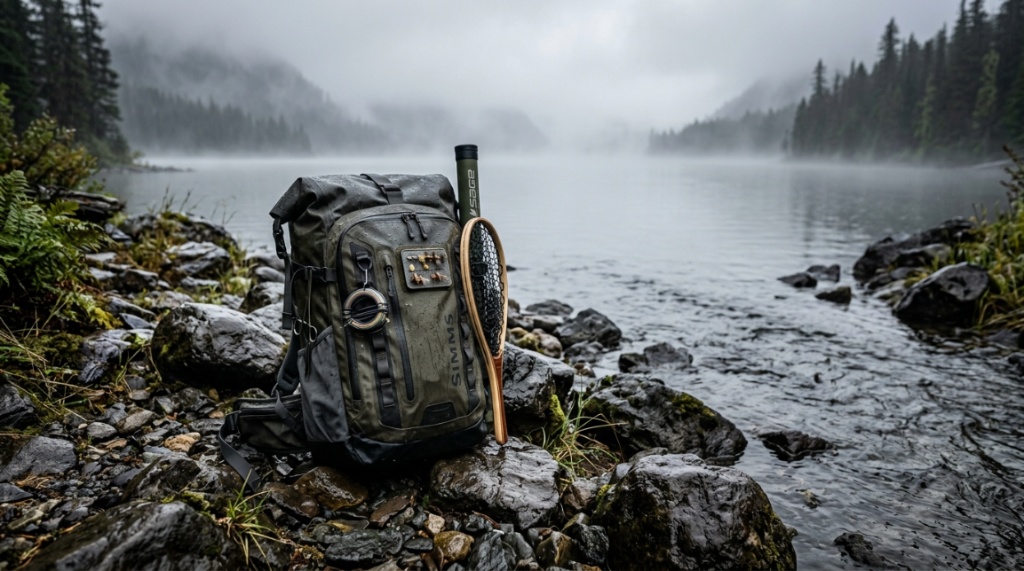
The most common mistakes are over-stuffing the pack, breaking the seal, and assuming that “water-resistant” is the same as “waterproof.” Over-stuffing places tension on the zippers and roll-top closures, forcing gaps to open. Also, using the pack as a cooler and placing hot items inside will create condensation.
Overpacking and Compromising the Seal
When you overstuff, you compress the foam padding, which damages your gear and the pack’s shape. The roll-top fold becomes difficult to execute properly because the bag is stretched to its limits. Always leave 20% of your pack’s volume empty to ensure proper sealing and air displacement.
Mistakenly Submerging a “Splash-Proof” Pack
Splash-proof packs have a DWR (Durable Water Repellent) coating on the exterior, but they don’t have sealed seams. They are great for light drizzle but not for dunking. Read the spec sheet carefully—if it doesn’t say “all seams sealed” and “IPX6,” assume it’s not safe for immersion.
Is a Waterproof Backpack Worth the Higher Price?
Yes, if you fish regularly. The initial cost is higher than a standard pack, but the price of replacing a smartphone, a reel, or a set of electronics is significantly higher. A high-quality waterproof pack lasts 5-10 years with proper care, making it a more economical choice over time.
Cost-Benefit Analysis of Cheap vs. Premium Packs
A $30 “water-repellent” backpack offers no real security. A $150-250 TPU-sealed pack offers true dryness. The difference in price is the cost of technology: welded seams, expensive zippers, and dense materials. If you lose a $500 phone to water, you could have bought two premium packs. The value proposition is clear: protection is cheaper than replacement.
Frequently Asked Questions
Can I use a waterproof backpack for fly fishing?
Absolutely. Fly fishing requires quick access to tippets, floatant, and fly boxes. Look for a waterproof pack with a fold-down front panel that allows quick access to the main area without opening the roll-top seal. Also, ensure there are exterior pockets for your extra fly rod. This keeps your gear organized and dry in the element.
How do I dry a waterproof backpack quickly after a trip?
Open all compartments, unzip all pockets, and turn the pack inside out if possible. Use a soft towel to wipe down the interior to remove any condensation. Hang it upside down in a well-ventilated area, out of direct sunlight. Avoid using a hair dryer or heater, as high heat can melt the TPU coating.
What is the best capacity for a weekend fishing trip?
For a weekend trip (2 days), you need a 40-50 liter backpack to accommodate clothes, food, and camping gear plus tackle. Look for one with a sleeping bag compartment at the bottom that is separate from the fishing gear storage to keep everything organized and dry.
Are wheeled waterproof fishing backpacks practical?
Wheeled backpacks are excellent for airport travel or flat terrain like piers and boardwalks. However, they are too heavy and bulky to carry over rocks or through the woods. They are best used as travel gear to protect your equipment on flights, not for actual wading.
Can I bring a waterproof backpack on an airplane as a carry-on?
Most 30-liter packs are carry-on compliant. Always check your airline’s size restrictions (typically 22” x 14” x 9”). However, hooks and line cutters are not allowed in carry-on, so keep them in checked baggage or your tackle box.
Conclusion: Lock in the Dryness and Fish with Confidence
Mastering your gear means mastering the environment. A waterproof fishing backpack is an investment in your safety, your equipment, and your peace of mind. By understanding IPX ratings, materials, and proper packing technique, you eliminate the deep frustration of wet gear. You’ve got the know-how; now apply it. Pick the pack that fits your terrain, pack it correctly, and know that when the weather turns or the water splashes, your gear is safe.
Don’t wait until the first thunderstorm rolls over the lake—make the change today. Just remember that a proper pack is more than a bag; it’s your mobile command center. With your valuables protected, you can focus on what matters: the fight, the catch, and the memories. Get out there and stay dry.