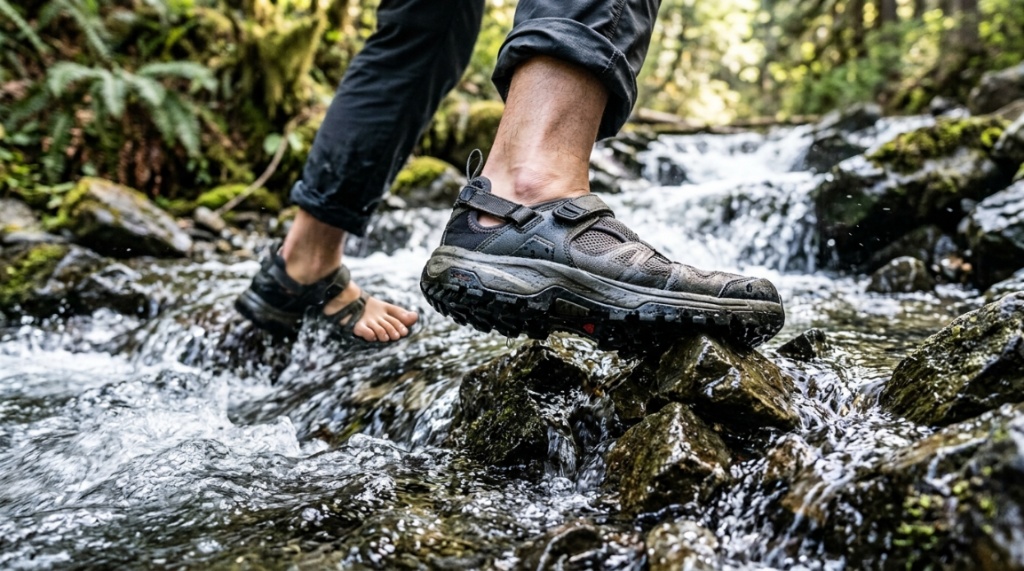
Imagine stepping onto a riverbed covered with slippery moss and jagged stones. Without proper protection, one wrong step can turn a relaxing float into a painful ordeal. You need footwear that grips, drains, and protects without weighing you down. The search for truly durable swim shoes for riverbeds often ends in frustration with options that fall apart after a single season. You have likely experienced the disappointment of soles peeling away or mesh tearing on sharp rocks. This guide solves that problem by breaking down exactly what to look for, how to test for quality, and where to find the best value. We will move beyond generic advice and provide a technical yet practical roadmap to keep your feet safe on any rocky adventure.
What Makes a Swim Shoe Suitable for Rocky Riverbeds?
A suitable swim shoe for rocky terrain must have a thick, non-marking rubber outsole with an aggressive tread pattern. It needs a closed-toe design and a snug fit to prevent debris from entering. Look for quick-drying materials like neoprene or breathable mesh that can handle constant wetness.
Why Sole Thickness and Tread Depth Matter
Sole thickness is your first line of defense against sharp edges. A thin sole (under 3mm) offers little protection and makes you feel every stone. However, a sole that’s too thick reduces flexibility and water flow. The sweet spot is 4mm to 5mm for a balance of protection and agility. Tread depth is equally crucial; deeper lugs (3mm or more) channel water away and provide grip on slick, algae-covered rocks. Shallow treads become useless on smooth river stones, creating a hydroplaning effect.
Upper Materials That Resist Wear and Tear
The upper part must not be an afterthought. Reinforced toe caps and heel guards protect against impacts, while a high-quality mesh or stretch neoprene upper prevents tearing when rubbing against rocks. Avoid shoes with large exposed foam areas, as they absorb water and deteriorate quickly. Look for a fused or welded construction instead of heavy stitching, which can break down in wet conditions.
Drainage and Drying Speed Requirements
Waterlogged shoes add weight and cause blisters. The best designs incorporate multiple drainage ports or a mesh that allows water to escape with every step. A shoe that stays wet for hours invites fungal growth and odor. Materials like closed-cell foam and treated webbing dry significantly faster than cotton or standard nylon. Your priority should be a system that expels water immediately, not one that absorbs and holds it.
How Do You Test Durability Before Buying?
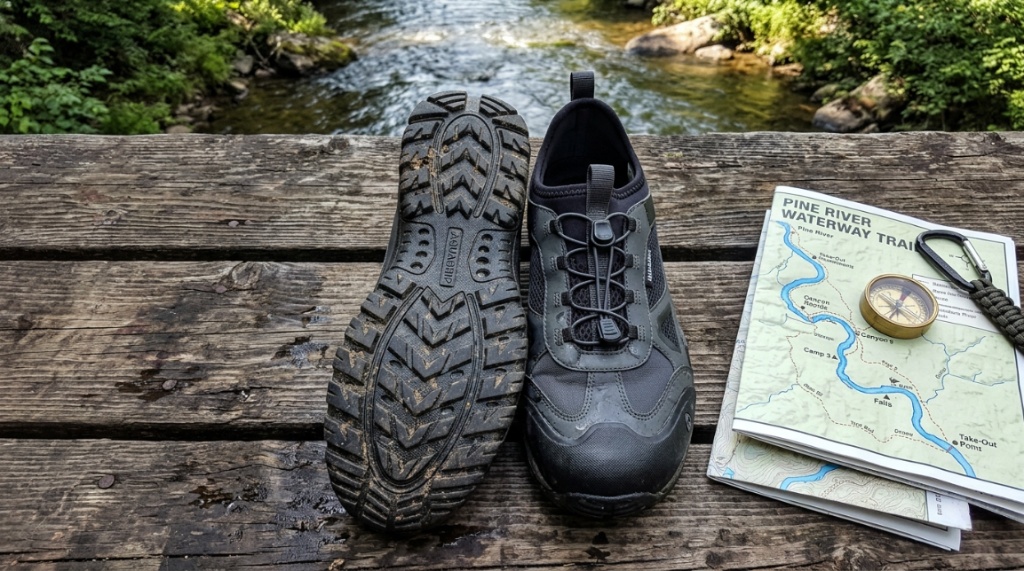
You can test durability by flexing the shoe in half; if the sole separates from the upper easily, it will fail quickly. Press the outsole to check for softness and try rubbing the tread against a rough surface to see if chunks fall off. A quick water soak test can reveal how the materials react to moisture.
The Flex and Twist Test for Structural Integrity
Grab the shoe with both hands and twist it like a wet towel. A durable model will resist torsional stress and return to its shape instantly. If you hear creaking or see visible stress lines, the bonding agents are weak. Also, bend the toe upward toward the tongue. The sole should flex naturally without cracking, and the upper should not pucker or detach.
Checking Stitching and Glue Quality
Inspect the internal seams. Look for double stitching or reinforced bartacks at stress points like the toe box and heel. Glue quality matters too; a thin layer of adhesive visible at the edges is a red flag. Durable swim shoes use thermoplastic polyurethane (TPU) welding or industrial-strength rubber cement that can withstand constant submersion. If you see any loose threads or gaps in the glue, put the shoe back on the shelf.
Reading Real-User Reviews for Longevity Clues
Manufacturer claims are less reliable than user reports. Search for reviews that mention “used for six months” or “second season.” Look for specific complaints about sole separation or torn mesh. A high average rating doesn’t guarantee durability, but a consistent pattern of failure after a few trips is a clear warning. Pay special attention to reviews from people who fish or hike in similar rocky river conditions, as their experience mirrors your intended use.
Which Materials Offer the Best Protection and Lifespan?
Rubber outsoles, EVA foam midsoles, and neoprene uppers provide the best combination of protection and lifespan. Avoid natural materials that degrade quickly. Focus on synthetic compounds engineered for marine environments.
Comparing Neoprene vs. Mesh Uppers
Neoprene offers excellent flexibility and insulation, keeping feet warmer in cold water. However, it can tear on sharp edges if it doesn’t have a reinforced toe cap. Mesh is highly breathable and drains better, but it’s vulnerable to punctures. The most durable hybrid uses a tight-weave mesh reinforced with a rubber toe cap and heel guard. This combination offers the drainage of mesh with the protection of rubber.
Understanding Rubber Sole Compounds
Not all rubber is created equal. Vibram® and rubber brands with high carbon content offer superior grip and resistance to abrasion. A simple test is to run the sole across a concrete floor; if it leaves black marks and grips, it’s likely a quality compound. Softer rubber grips better on wet surfaces but wears out faster. Harder rubber lasts longer but can be slippery. The ideal outdoor shoe uses a dual-density sole: a hard outer layer for durability and a softer inner layer for grip.
Zinc Plates and Reinforced Toe Boxes
Some advanced river shoes feature a zinc or composite plate embedded in the forefoot. This provides puncture resistance without weight penalty. A reinforced toe box is non-negotiable for rock hopping. It should be made of thick rubber or TPU that extends beyond the foot profile to absorb impacts. Without this, a direct strike on a boulder can break toes or cause severe bruising, even through the shoe.
How Should Durable Swim Shoes Fit on Rocky Terrain?
Durable swim shoes should fit snugly like a second skin, with no heel slip and minimal toe space. A loose fit is dangerous on rocks, as it allows movement that causes friction and injuries. You should be able to wiggle your toes, but not slide around inside the shoe.
Snug Fit vs. Sizing Up for Socks
Many people size up to accommodate thicker socks, but this is a mistake. A larger shoe moves on your foot, reducing stability and increasing the risk of ankle rolls. Instead, try the shoe with the exact sock thickness you plan to wear. Alternatively, consider getting a shoe with a bungee lace system that allows you to adjust tension precisely. A snug heel counter is critical to lock your foot in place.
Ankle Coverage for Protection and Support
Low-cut shoes offer more freedom, but they expose your ankles to scrapes and stings. Mid-height shoes with a collar provide additional protection and help keep small stones from entering. Some models integrate a neoprene gaiter that wraps around the ankle. This feature is excellent for riverbeds with shifting gravel, as it acts as a seal. Remember that extra ankle coverage provides support, reducing the risk of twisting on uneven terrain.
The “No-Slip” Test at Home
Before hitting the water, test your shoes at home on a wet, tiled surface. Walk normally and attempt to slide your feet. A high-quality sole will make squeaking noises and resist the slide. If you can glide easily, the shoe will fail on slippery rocks. Try this test again after the shoes are fully soaked, as many soles become dramatically more slippery when wet, When preparing for aquatic adventures, protecting your skin with the right surfing swimsuit is just as essential as choosing rugged footwear for uneven terrain.
Can Aqua Socks Provide Enough Durability for Riverbeds?
Standard aqua socks are generally not durable enough for rocky riverbeds. They usually feature thin soles and stretchy fabric that cannot handle sharp, jagged rocks. They are designed for pool decks and sandy beaches, not geological obstacles.
When Aqua Socks Work Fine
Aqua socks are acceptable for sandy-bottomed rivers or gentle streams with small stones. They offer minimal protection but are comfortable and packable. If your river adventure involves walking on sand, mud, or very small pebbles, a basic aqua sock will suffice. However, they lack the rigid structure needed to prevent stone bruising on a rocky riverbed.
Key Signs That Your Water Shoes Are Too Flimsy
If you can fold the shoe completely in half with one hand, it’s too flimsy. If the sole is smooth with no tread indentations, it’s dangerous. Also, if the upper is made of a single layer of stretchy fabric without reinforcements, it will puncture easily. Look for these signs to avoid a painful foot injury during your trip.
Upgrading from Aqua Socks to Real River Shoes
If you already own aqua socks but need more protection, consider your options for durable swim shoes for riverbeds. These typically feature a rubberized sole that extends up the sides and a robust toe cap. They are heavier than aqua socks but provide exponentially better safety. The investment is worthwhile for anyone who frequently ventures into uneven underwater terrain.
What Are the Best Features for Grip on Slippery Rocks?
The best grip features include a multi-directional lug pattern, a sticky rubber compound, and a wide heel brake. Siping cuts in the rubber also help displace water film. Avoid smooth soles or those with shallow, uniform circular patterns.
Understanding Multi-Directional Lugs
Multi-directional lugs have small angled fins that bite into the rock in all directions. This design provides traction when moving forward, backward, and sideways. Unidirectional treads are great for running but poor for scrambling on rocks. Examine the outsole pattern; it should have chevron-like shapes or hexagonal nodes that offer multiple gripping edges.
The Role of a “Sticky” Rubber Compound in Wet Conditions
Sticky rubber compounds contain additives that increase the coefficient of friction. They are the same materials used in climbing shoes. When you press the sole against a wet rock, the rubber conforms to the microscopic surface irregularities, creating a suction-like effect. This is why some shoes grip better than others despite having similar tread patterns. Look for terms like “sticky rubber” or “adhesive grip formula” in the product description.
Importance of a Heel Break and Traction Edge
Descending a rock face is when you feel most vulnerable. A pronounced heel break (a flat, angled area at the back of the heel) provides additional braking power. A traction edge on the outer side of the shoe helps maintain steering control during sidehill hiking. These features are often overlooked but are essential for handling steep, wet descents commonly found on riverbanks.
How to Maintain and Extend the Lifespan of Your Swim Shoes?
Proper maintenance involves rinsing them in fresh water after every use, removing wet insoles, and air-drying them away from direct sunlight. This routine prevents material breakdown, odor, and warping. Follow these steps to extend the life of your shoes.
Rinsing and Drying Best Practices
Always rinse your shoes with clean fresh water to remove sand, silt, and salt. These particles accelerate wear and tear by grinding between the fabric and your foot. Never wring out the shoes aggressively; instead, press them gently in a towel. Dry them in a shaded, ventilated area. Direct sunlight degrades the rubber and fades colors.
Removing Odors and Bacteria
River water often contains organic matter that breeds bacteria. To prevent odor, use a mixture of mild soap and water to clean the interiors. You can also soak them in a vinegar-water solution to neutralize ammonia. Avoid putting them in a washing machine, as the tumbling action can loosen the bond between the upper and the outsole.
Storing for the Off-Season
When the river season is over, do not leave your shoes in a damp closet. Stuff them with newspaper to absorb moisture and help them retain their shape. Store them in a mesh bag for airflow. Avoid keeping them in a hot car trunk, as high temperatures can melt the glues and deform the sole.
When Should You Replace Your River Shoes?
Replace your river shoes when the tread depth is worn down to 1mm or less, when the sole separates from the upper, or when you feel sharp rocks through the soles. Damage to the toe cap or excessive heel wear are also clear signals.
Identifying Sole Wear and Tear
Hold the shoe with the sole facing up. If the lugs are smooth and almost flat in high-wear areas (ball of the foot and heel), the shoe has lost its gripping ability. A worn sole cannot be repaired effectively. Continuing to use it increases your slip risk. Compare the current tread depth to a new pair to measure the difference.
Upper Damage and Structural Weakness
Inspect the upper for cracks, cuts, or elongated holes. If you can see through the mesh or if the neoprene has separated from the midsole, water and debris will enter, and further tearing is imminent. Any damage to the reinforced toe cap that exposes the foam layer should prompt a replacement.
The Risk of Keeping Worn-Out Shoes
Worn-out shoes give you a false sense of security. They may look okay on the outside, but the shock absorption and grip are compromised. This can lead to falls, sprained ankles, or cuts from sharp debris. An old shoe isn’t worth the risk. It’s better to replace them every 12-18 months of heavy use.
The Role of Pro Reviews vs. User Feedback in Choosing Gear
Professional reviews offer technical insight, while user feedback provides real-world context. You should consult both, but prioritize information that matches your specific use case. A pro may test in ideal conditions, while users often test in harsh reality.
Where to Find Trusted Expert Opinions
Look for gear review websites that have a history of testing water footwear. Trusted outdoor magazines and dedicated hiking websites often perform long-term tests. They measure objective metrics like sole hardness and water drainage. While they are a great starting point, their testing conditions might be for a generic audience, not specifically for rocky riverbeds.
Analyzing the Most Helpful User Reviews
Do not just read 5-star reviews. Filter for 3-star and 4-star reviews, as they often contain nuanced critiques. Search for phrases like “sharp rocks,” “used in Texas rivers,” or “after 6 months.” These comments reveal how the product behaves over time and in hard conditions. A one-star review complaining about delivery is not useful, but one about sole delamination is golden.
Trusting Your Own River Conditions
Your local river may have decomposed granite, limestone, or volcanic rock. Each of these affects footwear differently. A shoe that breaks down on abrasive sandstone might be fine on smooth river stones. Use pro reviews for general guidance, and user reviews to see how the shoes hold up on similar geology to your local spots. Your specific experience is the final judge.
Frequently Asked Questions
Are more expensive swim shoes always more durable?
Not always. Price can reflect brand marketing, but higher-priced options often use better rubber compounds and reinforced materials. However, some budget models are surprisingly robust. Always check the specifications rather than just the price tag.
Can I use running shoes in a river?
No. Running shoes soak up heavy water, become slippery, and take days to dry. The mesh and soles wear out quickly with water exposure, and they lack drainage ports. Invest in dedicated water shoes for safety and longevity.
How do I clean river shoes after a muddy trip?
Remove the insoles and laces. Rinse off all mud with a hose. Use an old toothbrush with a gentle soap solution to scrub the tread and upper. Rinse thoroughly and air dry. For stubborn stains, a baking soda paste works well.
What is the most critical feature for a beginner?
Grip is the most critical. A beginner will feel unstable on rocks, and a good rubber sole prevents falls. Start with a shoe that has deep lugs and a sticky rubber compound, even if you have to extend your budget a bit.
Will these shoes help me avoid slipping on wet wood?
Wet wood is more slippery than most rocks. A shoe with a strong gripping rubber will perform better, but the best sole for wet wood is one with a softer compound. Check for rawhide or TPR lugs that flex to conform to the wood’s texture.
Conclusion
Choosing durable swim shoes for rocky riverbeds is about more than grabbing the first pair at the store. It requires evaluating sole thickness, tread design, upper materials, and fit. You have learned how to test shoes for structural integrity and why certain materials outperform others. You now know that grip comes from a combination of a sticky rubber compound and a multi-directional tread pattern. Build your decision around these core principles, and you will avoid the common pitfalls of blisters, foot injuries, and premature wear. Now, head to your nearest outdoor retailer or trusted online store. Use the checklist you’ve learned here to examine the shoes closely. Make the smart investment today so every future river adventure is a secure and enjoyable one.