
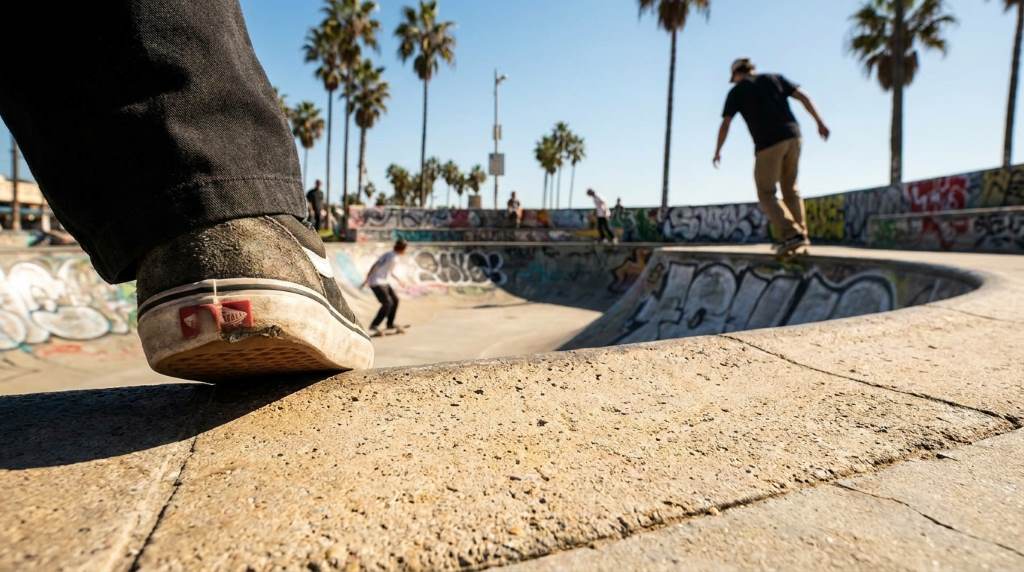
Heels bruise at parks in Los Angeles, CA mainly because hard surfaces transfer impact directly into the heel. Repeated landings, thin soles, poor fit, and worn cushioning can increase that impact. Skateboarding injuries generated about 101,577 annual emergency visits among U.S. youths in one CDC analysis.
Los Angeles skate parks commonly use concrete surfaces designed for predictable rolling and tricks. Choosing cushioned skateboarding shoes can reduce repeated heel stress during longer sessions.
Key Takeaways
- Hard concrete can send substantial impact through the heel during repeated landings.
- Heel bruising often develops from cumulative stress rather than one dramatic fall.
- Worn shoe cushioning can make ordinary landings feel unexpectedly harsh.
- A snug heel counter can reduce unwanted movement inside the shoe.
- Gradual session lengths give your feet more time to adapt.
- Persistent pain, swelling, numbness, or walking difficulty deserves professional evaluation.
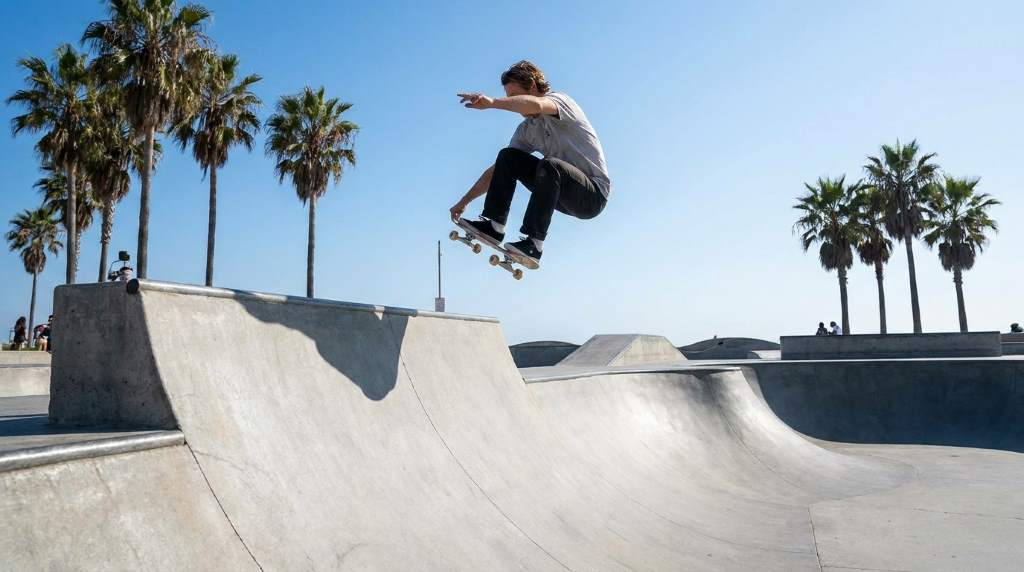
How Los Angeles Park Surfaces Affect Heel Impact
Los Angeles skate parks typically rely on concrete because it provides consistent rolling performance. City project specifications can require hard-trowel concrete finishes for skate park construction.
That consistency benefits skating, but concrete offers little forgiveness during abrupt vertical landings. When your heel strikes after a jump, impact travels upward through several connected tissues.
Your heel bone absorbs part of that force before surrounding soft tissue disperses the remaining energy. However, repeated impacts can exceed your tissue’s short-term recovery capacity.
Surface temperature can also affect how the session feels. Hot concrete may make your feet sweat more, which can increase internal shoe movement.
Uneven transitions create another challenge because your landing angle can change unexpectedly. Consequently, one heel may receive more pressure than the other.
Session timing matters too because crowded parks can force sudden stops and awkward landings. Beginners often experience this problem while learning ramps, drops, and transition movements.
Why Repeated Landings Create Heel Bruising
Heel bruising usually develops when repeated force irritates tissue beneath the heel. The irritation may involve soft tissue around the heel rather than the bone itself.
Each landing creates compression between your body weight and the hard surface. Therefore, frequent repetition can produce soreness even when individual landings seem harmless.
A Southern California emergency-department study recorded 97 skatepark injury encounters during its observation period. Fractures, dislocations, strains, sprains, contusions, and head injuries appeared among those cases.
That finding does not mean every painful heel indicates a serious injury. Instead, it highlights why repeated park impacts deserve sensible recovery and footwear choices.
Skaters also change their landing mechanics as fatigue develops. Tired legs may absorb less force, leaving the heel to handle more impact.
Beginners can reduce this problem by practicing controlled landings before attempting larger drops. Experienced skaters can benefit from the same principle during demanding sessions.
Common Landing Mistakes
- Landing heavily on the heels instead of distributing force across the feet.
- Keeping the knees too straight during vertical landings.
- Attempting tricks beyond current balance or board-control ability.
- Continuing after noticeable heel pain begins.
- Using shoes with compressed or damaged cushioning.
Can Skate Shoes Increase or Reduce Heel Bruising?
Yes, skate shoes can influence how much impact reaches your heels. Their cushioning, outsole construction, heel counter, and fit all affect landing comfort.
A shoe that fits poorly may allow your heel to slide during every landing. That movement creates friction while reducing the stability needed for controlled impact absorption.
For beginners comparing equipment, understanding maple skateboard deck beginners can also improve overall setup choices.
However, footwear cannot eliminate the forces created by hard concrete. Good shoes work best alongside sound technique, gradual progression, and sensible recovery.
Look for cushioning that remains responsive instead of feeling completely compressed. Excessively soft footwear can sometimes reduce board feel during technical movements.
Also check the heel collar before buying new shoes. A secure collar should hold your heel without creating pressure points.
What to Check Inside Your Shoes
- Heel cushioning: Look for cushioning that still rebounds after compression.
- Heel counter: Choose supportive construction that limits excessive heel movement.
- Insole: Replace flattened insoles when they no longer provide comfortable support.
- Fit: Keep your heel secure without squeezing the toes or midfoot.
- Outsole: Select durable rubber that supports stable board contact.
How Foot Technique Changes Heel Pressure
Foot technique can matter as much as footwear when you repeatedly skate on concrete. Your knees, hips, ankles, and feet should work together during landings.
Bending your knees allows larger joints to absorb part of the landing force. Meanwhile, keeping your body centered helps distribute pressure more evenly.
Avoid locking your knees immediately after touching down. That position can transfer more force toward the lower leg and heel.
Instead, land with controlled knee flexion and maintain a balanced posture. Your goal involves absorbing the movement rather than stopping it abruptly.
Board angle also affects heel loading. A slightly uncontrolled board can shift your weight backward and concentrate pressure beneath one heel.
Practicing low-height landings provides a safer way to improve this movement pattern. Increase height only after your technique remains consistent.
A Simple Landing Check
- Keep your eyes focused toward the intended landing area.
- Relax your knees before contact.
- Keep your weight centered over the board.
- Let your knees bend naturally after contact.
- Recover your balance before attempting another difficult movement.
How Fatigue Makes Heel Bruising More Likely
Fatigue changes how efficiently your body absorbs repeated impact. As your muscles tire, your landing mechanics can become less controlled.
Your legs may stop bending deeply enough to distribute force across multiple joints. Consequently, your heels can receive greater repetitive loading.
Fatigue also reduces concentration, especially during long sessions. Small technique errors then become more frequent and harder to correct.
Plan short recovery periods before your feet become painful. A five-minute break can sometimes prevent a minor irritation from becoming a larger problem.
Hydration and adequate nutrition can support normal exercise recovery. They cannot prevent bruising alone, but they support your body’s broader recovery processes.
If your heels hurt during ordinary walking after skating, consider ending the session. Continuing through worsening pain rarely improves technique or recovery.
What to Do When Your Heel Starts Hurting
First, stop the activity that causes the pain and assess how your heel feels. Avoid repeatedly testing the painful movement just to check whether it improved.
For a minor bruise, relative rest can reduce continued irritation. Elevating the foot may also help when swelling develops after activity.
Cold therapy can provide temporary comfort during the early period after an impact. Use a protective layer rather than placing extreme cold directly against skin.
Return gradually when normal walking feels comfortable again. Start with low-impact movement before returning to demanding skate sessions.
Do not treat severe pain as ordinary skate soreness. Significant swelling, deformity, numbness, weakness, or inability to bear weight requires medical attention.
Persistent heel pain also deserves evaluation, especially when rest does not improve symptoms. A healthcare professional can determine whether the problem involves soft tissue, bone, or another structure.
How to Prevent Heel Bruising at Los Angeles Parks
Prevention starts before you step onto the concrete. Check your shoes, inspect your equipment, and warm up your legs before attempting difficult tricks.
Begin each session with several minutes of easy movement. Then practice basic riding before progressing toward jumps, drops, or technical lines.
Choose skate shoes that match your skating style and current skill level. Avoid using heavily worn shoes simply because they remain comfortable around the house.
Track how your feet respond after each session. If soreness consistently increases, reduce session intensity instead of ignoring the pattern.
Another useful strategy involves varying practice intensity across the week. Alternating demanding sessions with easier practice gives your tissues additional recovery time.
You can also explore affordable skate brands 2026 when replacing worn footwear or building a more suitable setup.
Use This Pre-Skate Checklist
- Inspect the shoe soles for uneven wear.
- Check whether heel cushioning feels compressed or flat.
- Tighten laces enough to secure the heel comfortably.
- Warm up ankles, calves, knees, and hips.
- Start with controlled movements before attempting larger tricks.
- Stop when pain changes from mild soreness to sharp or persistent discomfort.
When Heel Bruising Could Signal Something More Serious
A simple bruise usually improves gradually with reduced loading and adequate recovery. However, not every heel injury comes from ordinary bruising.
Sharp pain after a hard landing deserves more attention than mild post-session soreness. Likewise, swelling that rapidly increases can indicate a more substantial injury.
Difficulty standing or walking provides another important warning sign. Numbness, tingling, weakness, or visible deformity should also prompt professional assessment.
Heel pain that repeatedly returns after skating deserves investigation as well. Recurrent symptoms may indicate that your technique, footwear, training volume, or injury recovery needs adjustment.
Do not rely solely on pain tolerance when deciding whether to continue. A strong skater can still develop an injury through repeated mechanical stress.
How Beginners Can Build Heel Tolerance Safely
Heel tolerance develops through gradual exposure rather than forcing your feet through painful sessions. Start with flat-ground movements before increasing landing height.
Keep early sessions relatively short and focus on consistent technique. As your body adapts, gradually increase complexity, duration, and intensity.
Use recovery days after demanding sessions when your heels feel unusually tender. Recovery gives irritated tissues time to settle before additional loading.
Beginners should also avoid copying advanced tricks without understanding the required landing mechanics. Video demonstrations can show movement, but supervised coaching can provide better immediate feedback.
Finally, remember that comfort and performance should support each other. The best setup lets you control your board without forcing your heels to absorb unnecessary punishment.
Conclusion: Protect Your Heels Before Your Next Park Session
Heels bruise at Los Angeles parks primarily because repeated hard landings concentrate force through the feet. Concrete surfaces, fatigue, poor technique, and worn footwear can amplify that stress.
You can reduce the risk by improving landing mechanics, choosing supportive skate shoes, and managing session intensity. Most importantly, respect persistent pain instead of treating it as a normal part of skating.
Before your next park session, inspect your shoes and practice controlled landings first. If heel pain continues despite rest, seek qualified medical guidance before returning to intense skating.
Frequently Asked Questions
Why do my heels hurt after skating at a park?
Repeated landings on hard concrete can compress and irritate the tissues beneath your heels.
Can skate shoes prevent heel bruising?
Supportive skate shoes can reduce unnecessary impact, but they cannot eliminate landing forces.
Should I skate with a bruised heel?
You should avoid skating while significant pain remains, especially when walking also feels uncomfortable.
How long does a minor heel bruise take to improve?
A minor bruise often improves gradually with reduced loading, although recovery time varies by severity.
When should I see a doctor for heel pain?
Seek professional evaluation for severe pain, major swelling, numbness, deformity, or difficulty bearing weight.


