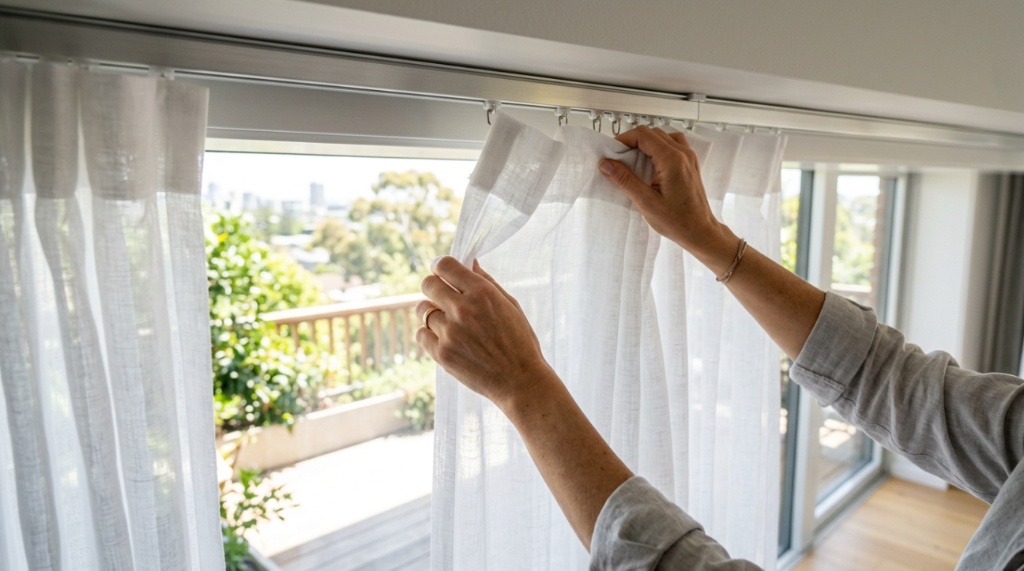
If you live in California, your sliding glass doors probably do double duty: they let in that coveted natural light and frame the outdoor living space you likely use year-round. But that same glass expanse can present a styling challenge. How do you dress a wide, sliding panel without making the room feel heavy, blocking the view, or wrestling with curtains that snag every time you slide the door open? The answer lies in choosing the right hardware, fabric, and hanging method for your specific needs. This guide breaks down the most practical and stylish approaches to sliding door curtain styles California homeowners actually use, helping you balance light control, privacy, and that effortless indoor-outdoor flow.
Key Takeaways
- Prioritize curtain hardware that keeps fabric completely clear of the sliding track to prevent snags and ensure smooth operation.
- Choose fabric based on your primary goal: sheer linen for light diffusion, blackout materials for energy efficiency, or outdoor-rated fabrics for high-heat, high-sun windows.
- Mount the rod or track wider and higher than the door frame to make the window appear larger and allow full glass exposure when curtains are open.
- Consider the California climate—UV protection, heat reduction, and indoor-outdoor flow—when selecting materials and lining options.
- Use a single large panel on a track system rather than multiple small panels for a cleaner, more modern look that functions better for wide doors.
Why Regular Curtains Fail on Sliding Doors
The standard mistake is treating a sliding glass door like a standard window. A typical curtain rod with two panels often ends up covering part of the glass even when open, blocking the view and the path. Worse, fabric that falls onto the track can get caught in the door mechanism, causing tears or frustrating tug-of-war battles. The core problem is width and movement. A sliding door needs a system where the fabric stacks entirely on one side (or both) completely clearing the opening, and where the hardware ensures the panels never touch the moving door itself. For this reason, the best solutions often involve ceiling-mounted tracks or rods extended well beyond the frame, paired with panels that move independently.
Selecting the Right Hardware System
Before you pick fabric, you need to decide how the curtains will move. Your hardware determines both function and aesthetic. Here are the most effective options for California homes, where wide openings are common and indoor-outdoor living is a priority.
Ceiling-Mounted Track Systems
These are the gold standard for sliding doors. A track mounted to the ceiling or upper wall allows the curtain panel to glide effortlessly from one end to the other without any sagging. Since the track is positioned away from the door frame, the fabric hangs straight down, completely clearing the glass and the sliding mechanism. You can pull the entire stack of fabric to one side, maximizing the opening when you want full access to the patio or backyard. This system works beautifully with lightweight to medium-weight fabrics and creates a clean, architectural look that’s popular in modern coastal and desert interiors.
Extended Rods vs. Standard Rods
A standard rod that just fits the door frame forces the curtains to cover the glass. Instead, use a rod that extends 12 to 18 inches beyond each side of the frame. This allows the open fabric to stack entirely on the wall, leaving the glass exposed. For slimmer doors, a sturdy tension rod or a decorative rod with large rings can work, but you must ensure the bracket holds the rod far enough away from the door casing (about 4 to 6 inches) to prevent fabric from touching the glass. However, for doors wider than 5 feet, a track system is almost always more reliable than a traditional rod, as long rods tend to bow in the middle under the weight of heavy fabric.
Two-Panel vs. Single-Panel Setup
For a truly functional setup, consider using a single large panel per side, or even one very wide panel that pulls to one side. Multiple small panels (common for windows) create too many seams and constant adjustments. A single panel per side is easier to slide, looks more tailored, and moves out of the way with one simple tug. If you prefer a symmetrical look, use two panels, but each should be wide enough to clear the entire glass opening when drawn back. To find the right width, measure the full span of the door plus the space beyond both sides, then multiple by 1.5 to 2 for adequate fullness.
Choosing the Right Curtain Fabric for California Climates

California’s climate varies drastically from the foggy coast to the scorching inland valleys, so your fabric choice should respond to your local conditions. The right fabric solves real problems: heat gain, UV damage to furniture, and loss of privacy without sacrificing light.
Light-Filtering Fabrics for Coastal Areas
If you live near the coast where temperatures are mild, sheer linen or a linen-cotton blend is ideal. These fabrics diffuse harsh sunlight, softening the glare while still allowing a view of the outdoors. They also add a relaxed, organic texture that fits California’s casual aesthetic. Choose a lighter weight natural fabric in warm whites, sand, or soft sage tones to enhance the airy feel. Sheers are also practical for homes on busy streets, providing daytime privacy without making the room feel like a cave.
Blackout and Thermal Curtains for Inland Heat
For Inland Empire, Central Valley, or desert homes with intense afternoon sun, blackout curtains are a smart investment. They block a significant amount of solar heat, keeping rooms cooler and reducing air conditioning costs. Look for a triple-weave blackout fabric that doesn’t require a separate liner, as this is easier to hang and wash. These curtains are also excellent for bedrooms where light control is essential for sleep. However, full blackout panels in a living room can feel heavy and block the outdoor connection completely. A good compromise is a combination of sheer curtains over the glass for daytime, with heavier blackout curtains on the sides to close at peak heat hours.
For a deeper dive into specific fabric recommendations and local considerations, you can review detailed sliding door curtain styles California that match both aesthetic and performance needs.
UV-Resistant and Outdoor Fabrics
California sunshine is beautiful, but it’s tough on fabrics. Untreated cotton or linen can fade quickly in direct sun. Synthetic fabrics like polyester, acrylic, or olefin hold their color much longer and resist moisture, making them excellent for doors that lead to patios or pools. If you want the natural look of linen but the performance of a synthetic, look for “performance” versions that are solution-dyed or treated with UV inhibitors. This is a practical consideration that many first-time buyers miss, leading to prematurely washed-out curtains within a year or two.
Installation Tips to Avoid Snags and Draping Issues
Proper installation is half the battle. Even the best hardware will fail if the height or width is wrong. Here are the critical measurements and tricks to ensure your curtains slide smoothly for years.
Hang High and Wide
Mount your track or rod about 4 to 6 inches below the ceiling (or even at the ceiling) instead of directly above the door frame. This draws the eye upward, making the ceiling feel taller and the door appear grander. Combining a high mount with a wide mount—extending the rod 12+ inches past the frame on each side—means your curtains will never encroach on the glass when open. This is the single most effective trick for a professional-looking installation.
Ensure Full Clearance from the Track
For track systems, check that the gliders (the little pieces that hold the curtain) are long enough to keep the fabric away from the door. Some gliders are angled to push the fabric outward. If using a rod, ensure the rings have a large enough diameter and that the rod itself is positioned far enough from the wall. A quick test: slide the door fully open and closed before hemming the curtains to confirm the fabric never touches the moving glass. It’s much easier to adjust the rod position now than to deal with a chronic snagging issue later, While updating your interior living spaces and patio aesthetics, don’t forget about exterior home upkeep such as maintaining your garage door.
Use the Right Hooks or Rings
For track systems, use a “S-hook” or “pinch-pleat” carrier that gives you control over the drape. For rods, large grommet rings or back-tab panels slide more smoothly than curtain clips, which can catch on the fabric or the rod. Avoid using too many clips, as this can distort the fabric. A uniform, smooth top edge looks more intentional and operates more quietly.
Styling Ideas for Different California Home Aesthetics
Your door is a focal point, and the curtain style should complement your home’s architecture and interior design. Here is how to tailor your curtain choice to popular California styles.
Modern Coastal
Think light, breezy, and sun-washed. Use sheer white or natural linen panels in a smooth, straight drop with minimal gathers. A ceiling-mounted track system is perfect here, allowing the panels to stack neatly on the side. Skip heavy valances or decorative toppers. Instead, let the simplicity of the fabric and the clean lines of the hardware speak for themselves. This style works best with 1.5x fullness (not too gathered) and a crisp, straight hem.
Mediterranean or Spanish Revival
This style embraces warmth, texture, and subtle drama. Use heavier fabrics in earthy tones like terracotta, olive, or deep clay. Consider a decorative wrought-iron or dark bronze rod with large, visible rings. Add a gentle wave or ripple fold using a track system to create a sophisticated, structured feel. Tassels or a subtle tie-back are acceptable, but keep them functional to pull the curtain completely out of the doorway.
Desert Modern
Mixing functionality with natural elements is key. Use fabrics that look organic but perform technically, like performance linen or a blended fabric with a subtle slub texture. Colors should mimic the landscape: warm grays, sand, dusty blue, or charcoal. A flat or ripple-fold panel on a simple track provides a clean, zen look. In this setting, blackout or UV-resistant linings are your best friend, protecting your furniture and keeping the space cool without sacrificing the minimalist aesthetic.
How to Measure for Sliding Door Curtains Correctly
Getting measurements right saves you from costly returns and a frustrating installation process. Here is a step-by-step guide tailored to sliding doors.
- Measure the width: Measure the total width of the glass door. Then, decide how far beyond the frame you want the curtains to stack (usually 12-18 inches per side). Your total curtain rod or track width should equal the door width plus two times your chosen “stack-back” length.
- Measure the height: Decide your mounting height. For a ceiling mount, measure from the ceiling to the floor. For a wall mount, measure from the top of where the rod will hang to the floor. For a standard look, add about 4 inches above the door frame.
- Determine panel width: For each panel, multiply your final rod width (excluding finials) by 0.5 if you want a flat look, or by 1.5 to 2.0 for a gathered look. Divide this by 2 if you are using two panels. This gives you the fabric width needed for each panel.
- Determine panel length: Measure from the bottom of the rings or gliders to the floor. Subtract ½ inch to 1 inch if you want the curtains to float just above the floor, or add 1-2 inches for a “puddle” look (which is generally not recommended for doors that are used frequently, as fabric on the floor collects dust and is a tripping hazard).
Frequently Asked Questions
What is the best curtain style for sliding glass doors?
The most functional and aesthetically pleasing style is a single wide panel per side, hung on a ceiling-mounted track or a rod extended well beyond the door frame. This ensures the fabric clears the door completely when open and creates a clean, tailored look. Ripple-fold or flat panels with grommets or S-hooks are easier to slide than traditional pinch pleats with multiple clips.
Should I use sheer or blackout curtains on a sliding door?
It depends on your primary need. If you want privacy without losing light or the view during the day, use sheer linen. If you need to block heat and light for a bedroom or a west-facing living room for TV watching, blackout curtains are more effective. In many California homes, a combination of sheers close to the glass and heavier drapes on the sides offers the most flexibility.
How do I keep sliding door curtains from getting caught in the door?
Mount your hardware so the curtain hangs on a track that is positioned at least 3-4 inches away from the door frame, or use a rod with large offset brackets. Never let the fabric touch the glass or the sliding track. Using a ceiling-mounted track system with gliders that hold the fabric straight down is the most reliable solution to avoid snags.
How many panels do I need for a sliding glass door?
For practical purposes, two panels (one on each side) are ideal. However, for very wide openings over 6 feet, consider using a single extra-wide panel that pulls to one side to avoid too many seams and a cluttered look. The important thing is that each panel is wide enough to fully clear the glass when drawn open.
Conclusion
Styling sliding door curtains for a California home comes down to a simple formula: prioritize function, choose the right hardware, and then select fabric that responds to your local climate. Avoid the common pitfalls of short rods, heavy fabric that blocks the view, and panels that snag on the track. By installing a ceiling-mounted track or an extended rod, using a single wide panel per side, and opting for UV-resistant or thermal materials suited to coastal or inland conditions, you can have both beauty and practicality. The result is a polished look that complements your indoor-outdoor lifestyle, protects your interior, and makes the space feel even more open and inviting.