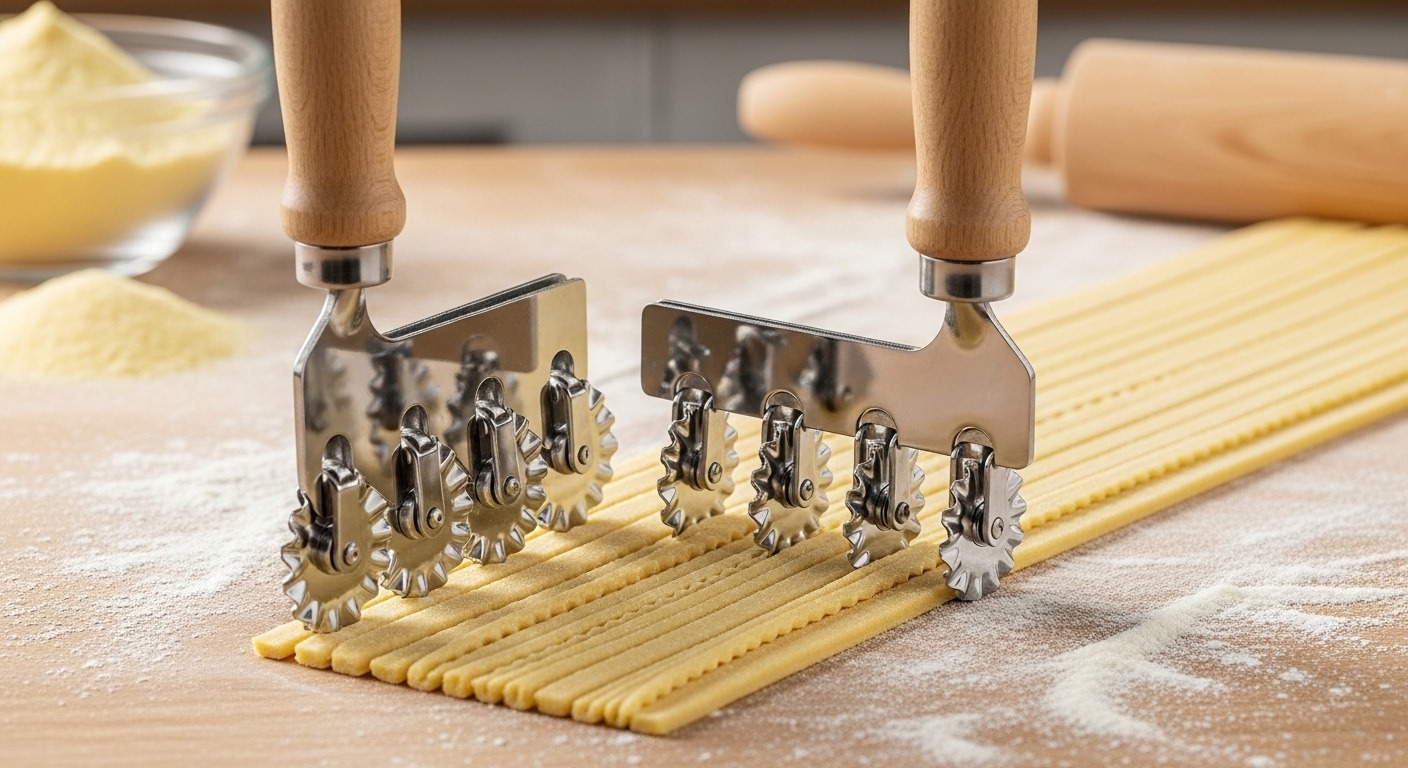
A multi-wheel pasta cutter is a handheld tool with multiple rotating blades that cut dough into uniform pasta strips in a single pass. It reduces prep time, improves consistency, and increases output compared to single-wheel cutters or knives.
If you have ever cut pasta dough with a knife, you know the problem. The strips vary in width. The edges are uneven. You measure again. You trim again. You lose time.
This is where a multi-wheel cutter changes the workflow.
Instead of cutting one strip at a time, you cut several at once. The blades are evenly spaced. Many models function as an adjustable dough cutter, meaning you can set the distance between wheels to control strip width. That single adjustment replaces repeated measuring and manual alignment.
In both home and commercial kitchens, speed and consistency matter. According to foodservice efficiency studies, prep tasks that reduce repetitive motion can lower labor time by up to 30% during peak production hours. Pasta cutting is one of those tasks.
This article explains how multi-wheel pasta cutters solve common problems, how they compare to other tools, and when they make sense for your kitchen.
Why Do Traditional Pasta Cutting Methods Slow You Down?
Short answer: Single blades require repeated measuring, repositioning, and manual alignment, which increases prep time and inconsistency.
Problem: You roll out pasta dough. Now you need uniform pasta strips for fettuccine or tagliatelle. Using a knife or single-wheel cutter means cutting one strip at a time.
Agitation:
- You re-measure width repeatedly.
- Dough shifts during cutting.
- Edges become uneven.
- Production slows during busy service.
In small kitchens, this may seem manageable. But in restaurants producing 10–15 kg of pasta dough daily, small inefficiencies compound quickly.
Case example: A mid-size Italian restaurant in Mumbai reported that switching from manual knife cutting to a multi-wheel cutter reduced average prep time for fettuccine batches from 45 minutes to 28 minutes per 5 kg batch. That is a 37% reduction in cutting time alone.
Core issue: Manual repetition creates bottlenecks.
Multi-wheel cutters solve this by cutting multiple parallel lines at once.
How Does a Multi-Wheel Cutter Work?
Short answer: It uses multiple circular blades mounted on an adjustable frame, allowing simultaneous parallel cuts across rolled dough.
The tool consists of:
- A handle for grip and pressure control
- Multiple stainless steel wheels
- A sliding or screw-based adjustment system
When you roll it across flattened dough, each wheel slices simultaneously. The result is uniform pasta strips in a single motion.
Many models double as an adjustable dough cutter, which allows width customization from narrow angel hair strips to wider pappardelle cuts.
This design reduces:
- Repeated passes
- Manual alignment
- Human measurement error
It also ensures consistent cooking times because uniform pasta strips cook evenly. That improves plating consistency and portion control.
How Much Time Can You Actually Save?
Short answer: Most kitchens report 25–40% faster cutting times compared to single-wheel methods.
Let’s break it down.
| Method | Average Time (5 kg Dough) | Consistency | Labor Intensity |
|---|---|---|---|
| Knife Cutting | 45–50 minutes | Low | High |
| Single-Wheel Cutter | 38–42 minutes | Moderate | Moderate |
| Multi-Wheel Cutter | 25–30 minutes | High | Low |
In commercial kitchens using commercial pasta tools, this time reduction translates into lower labor costs and faster order turnaround.
Even for home cooks, saving 15–20 minutes per batch makes weekend pasta prep more practical.
How Do Multi-Wheel Cutters Improve Uniform Pasta Strips?
Short answer: Fixed or adjustable spacing ensures consistent width across every strip, which improves cooking performance and presentation.
Uniform pasta strips are not just aesthetic. They matter for:
- Even boiling time
- Sauce absorption consistency
- Professional plating
When strips vary in thickness, thinner pieces overcook while thicker ones remain firm. This creates texture inconsistency.
Multi-wheel cutters eliminate this issue because the wheels maintain parallel spacing. Once adjusted, every pass replicates the same width.
This is especially useful in batch production where visual consistency impacts brand perception.
Are Multi-Wheel Cutters Worth It for Home Kitchens?
Short answer: Yes, if you make pasta regularly. Occasional users may prefer simpler tools.
Home cooks typically face two constraints:
- Limited time
- Limited counter space
A multi-wheel cutter addresses time. It reduces repetitive slicing. Cleanup is also simple if the blades detach for washing.
If you prepare fresh pasta once a month, a knife may suffice. But if you prepare weekly batches, the time savings accumulate quickly.
For those comparing tools, reviewing specialized guides such as this breakdown of pastry and ravioli cutters can help you evaluate options: commercial pasta tools guide.
How Do Multi-Wheel Cutters Compare to Pasta Machines?
Short answer: Pasta machines automate rolling and cutting but cost more and take up more space. Multi-wheel cutters offer flexibility at lower cost.
Pasta machines with built-in cutters provide:
- Motorized or manual rolling
- Pre-set cutting widths
However:
- They are less flexible in width adjustments.
- They require more storage space.
- They cost significantly more.
Multi-wheel cutters are portable. They require no electricity. They allow manual width customization. For small kitchens, that balance often makes more sense.
What Makes a Good Adjustable Dough Cutter?
Short answer: Durable stainless steel blades, smooth adjustment mechanism, ergonomic handle, and stable wheel alignment.
When choosing a multi-wheel cutter, look for:
- Blade material: Food-grade stainless steel resists rust.
- Adjustability: Easy-to-lock spacing system.
- Wheel stability: No wobble during rolling.
- Grip comfort: Reduces hand fatigue.
Inferior models may loosen during cutting, leading to uneven spacing. Stability is critical for uniform pasta strips.
How Do Commercial Kitchens Benefit Most?
Short answer: They reduce prep bottlenecks, standardize output, and lower labor hours.
In high-volume kitchens, efficiency compounds.
Case example: A catering company producing 200 pasta servings per event replaced single-wheel cutting tools with multi-wheel cutters across three prep stations. Over six months, they recorded:
- Average prep time reduction: 32%
- Lower product waste due to uneven cuts: 18%
- Improved plating consistency ratings from customers
For businesses using multiple commercial pasta tools, adding multi-wheel cutters aligns with lean kitchen principles: reduce motion waste, standardize processes, and increase throughput.
Does It Reduce Physical Strain?
Short answer: Yes, fewer repetitive cuts reduce wrist strain and hand fatigue.
Manual cutting requires repeated downward pressure. Over time, that leads to strain, especially during peak production.
Multi-wheel cutters reduce the number of passes required. Less repetition means lower cumulative strain.
For chefs working long shifts, ergonomic tools matter.
What Types of Pasta Can You Cut?
Short answer: Fettuccine, tagliatelle, pappardelle, lasagna sheets, and even pastry dough.
Because many models function as an adjustable dough cutter, they are not limited to pasta. They also work for:
- Ravioli sheet trimming
- Pie lattice strips
- Cracker dough scoring
- Fondant shaping
This versatility increases return on investment.
Conclusion: Is a Multi-Wheel Pasta Cutter the Right Upgrade?
Multi-wheel pasta cutters solve a clear problem. Cutting pasta manually is slow. It creates inconsistencies. It increases strain.
By cutting multiple uniform pasta strips in one pass, these tools reduce prep time by up to 40%. They standardize width. They improve cooking consistency. They lower repetitive strain.
For home cooks who prepare pasta weekly, the time savings add up. For commercial kitchens, efficiency gains directly affect labor costs and service speed.
If you are evaluating tools, compare durability, blade stability, and adjustment range carefully. A reliable adjustable system makes the difference.
Ready to upgrade your pasta prep workflow? Explore high-performing cutters and detailed comparisons here: Best Pastry & Ravioli Cutters Guide. Choose tools that support speed, consistency, and better results.
Frequently Asked Questions
1. Are multi-wheel pasta cutters better than single-wheel cutters?
Yes. They cut multiple strips at once, reducing prep time by 25–40% while improving uniformity.
2. Can beginners use an adjustable dough cutter?
Yes. Most models are straightforward. Adjust spacing, lock it in place, and roll across flattened dough.
3. Do commercial pasta tools improve food quality?
They improve consistency. Uniform strips cook evenly, which improves texture and presentation.
4. Are they dishwasher safe?
Many stainless steel models are dishwasher safe, but hand washing extends blade life.
5. How long do multi-wheel cutters last?
High-quality stainless steel models can last several years with proper cleaning and storage.
6. Can they cut ravioli?
Yes. They can trim ravioli sheets evenly before sealing or after filling.
7. Are they suitable for large-scale production?
Yes. Many commercial kitchens integrate them into daily prep workflows to reduce bottlenecks.
Don’t Miss These Articles: How to Improve Home Office Efficiency with a Wireless Label Printer
Up Next: What is a certificate provider?