You’re standing on the tee box, staring down a 400-yard par 4. The group ahead is already out of range, but your drive barely carries past the 150-yard marker. You’ve tried swinging harder, but that only sent your ball slicing into the trees. The real problem isn’t your swing—it’s likely your equipment. Most weekend golfers lose 30 to 50 yards of potential distance simply because they are using the wrong tools. Whether you are fighting a slice, struggling with launch angle, or just tired of being out-driven by your playing partners, the answer often lies in how you choose your gear. This guide will walk you through exactly how to maximize your golf equipment distance by selecting the right driver, shaft, ball, and even the humble tee. Let’s turn those pop-ups into bombs.
What Is the Single Most Important Club for Distance?
The driver is undeniably the most important club for achieving maximum distance off the tee. It features the largest clubhead, the longest shaft, and the lowest loft, all designed to generate the highest ball speed. However, simply buying any driver won’t work. Modern drivers range from 440cc to 460cc in head size, and the technology inside—like adjustable weights and face thickness—directly influences how far the ball travels. If you are still playing a driver from the early 2000s, you are leaving serious yardage on the table.
Driver Loft: Why 9.5 Degrees Isn’t for Everyone
Many amateur golfers mistakenly believe that lower loft equals more distance. This is only true if you have an exceptionally high swing speed (over 105 mph). For the average golfer swinging around 85-95 mph, a 10.5 or even 12-degree driver will produce a higher launch angle and lower spin—two critical factors for carry distance. A driver with too little loft creates low, spinny knuckleballs that fall out of the sky. Do not let your ego dictate your loft.
Adjustability: Friend or Foe?
Adjustable drivers let you fine-tune the face angle and loft. If you tend to slice, closing the face slightly (by turning the hosel to a higher loft setting) can help square the face at impact. This simple adjustment can turn a 20-yard slice into a manageable fade, instantly adding 15 yards to your drive. Start with the standard setting and make one adjustment at a time.
How Does Shaft Flex Affect Driving Distance?
Shaft flex directly dictates how the clubhead releases into the ball. If the shaft is too stiff for your swing speed, the clubface arrives at impact open and the ball goes right (or slices), losing power. If the shaft is too whippy, the ball may hook violently or balloon into the air. The right flex ensures you transfer maximum energy from your swing into the ball at the exact moment of impact. For most male golfers, a Regular or Stiff flex is appropriate, but this should be verified by a club fitter or by checking your swing speed on a launch monitor.
Senior vs. Regular vs. Stiff: A Quick Guide
- Senior (A-Flex): Swing speeds under 80 mph. Helps generate launch and distance for slower swings.
- Regular (R-Flex): Swing speeds between 80 and 95 mph. The most common flex for recreational golfers.
- Stiff (S-Flex): Swing speeds between 95 and 105 mph. Offers better control for aggressive swingers.
- Extra Stiff (X-Flex): Swing speeds over 105 mph. Ideal for elite players who load the shaft hard.
A common mistake is buying a Stiff shaft because a friend uses one, but if your swing speed is 88 mph, you will actually lose distance because you cannot load the shaft properly. Get fitted—your wallet and your scorecard will thank you.
Which Golf Ball Maximizes Driver Distance?
The golf ball is the second most important piece of equipment for distance. Balls are designed in multiple layers: a two-piece ball is built for distance with low spin, while a four-piece or five-piece ball offers more spin control around the greens but may not be ideal for slower swing speeds. For pure distance off the tee, you want a ball with a low-compression core and a durable cover. Low compression allows the ball to deform more easily on impact, storing and releasing energy efficiently for players with moderate swing speeds.
Compression Ratings Explained
Compression is a measure of how much the ball compresses upon impact. Look for these ranges:
- Low Compression (50-70): Best for swing speeds under 85 mph. Softer feel, higher launch, longer carry.
- Medium Compression (70-90): Ideal for swing speeds between 85 and 105 mph. Balanced performance.
- High Compression (90+): For swing speeds over 105 mph. Firmer feel, lower spin, maximum distance for power hitters.
Do not assume a premium Tour ball will help you drive farther. Often, a $30 dozen of low-compression balls will out-drive a $50 Tour ball for the average golfer because the Tour ball spins too much off the driver. Test a few different models on a launch monitor before committing to a case.
Can the Length of Your Shaft Increase Distance?
Yes, a longer shaft can increase distance, but it comes with a significant trade-off in accuracy. For every half-inch you add to the shaft length, you can potentially gain 2-4 mph of clubhead speed, which translates to roughly 5-8 yards of distance. However, longer shafts are harder to control. The average stock driver shaft is 45 inches, but many standard models come at 45.5 or even 46 inches. If you struggle with a slice or a hook, a shorter shaft (44.5 inches) might actually help you find the center of the face more often, leading to more consistent distance.
The Mis-Hit Equation
Consider this: a perfect hit on a 46-inch shaft might go 260 yards. But if you mis-hit it 60% of the time, your average drive might be 220 yards. A 44.5-inch shaft might only produce a 250-yard perfect hit, but if you find the center 85% of the time, your average drive jumps to 235 yards. Consistency often wins the distance battle. If you are an experienced player, a longer shaft can work. If you are a beginner, stick to standard length.
How Important Is Clubhead Weight and CG Location?
Extremely important. The center of gravity (CG) of the driver head influences launch angle and spin rate. A low and deep CG (typically found in game-improvement drivers) helps launch the ball higher with less spin, which increases carry distance. A forward CG reduces spin but makes the club less forgiving. For distance, you generally want a driver with a low and rearward CG. Additionally, the overall weight of the head affects swing tempo. A heavier head can promote a smoother swing, while a lighter head allows for faster clubhead speed but may lead to loss of control.
Forgiveness Is a Distance Tool
Many golfers think forgiveness only helps on mis-hits. In reality, a forgiving driver (large sweet spot, high MOI) helps you maintain ball speed even when you don’t strike the center. A 10% loss of ball speed on a toe hit can cost you 15-20 yards. By choosing a driver with a high Moment of Inertia (MOI), you protect your distance on off-center strikes. Most modern game-improvement drivers have MOI values over 5,000 g/cm², which is excellent.
What Role Do Golf Tees Play in Driving Distance?
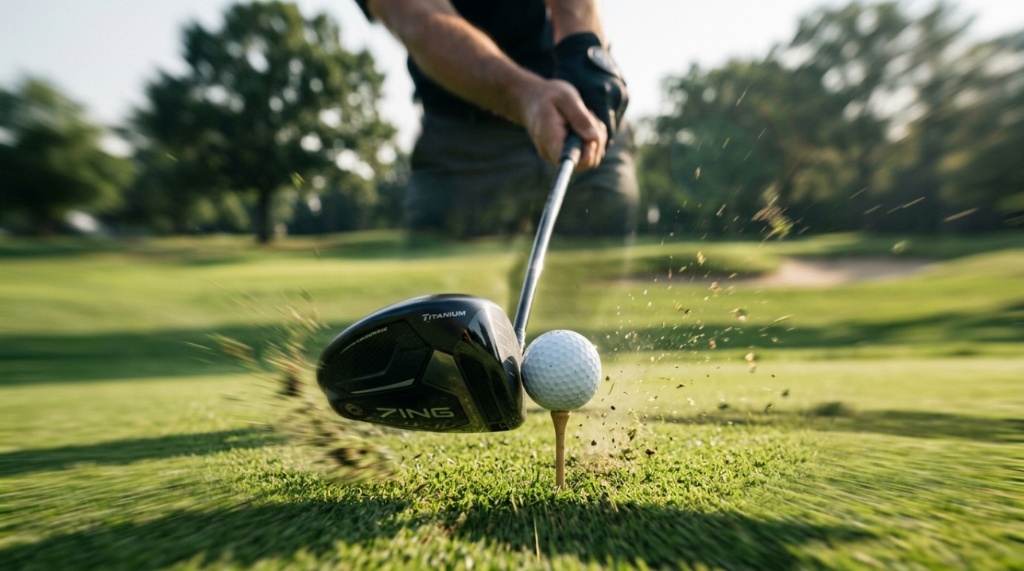
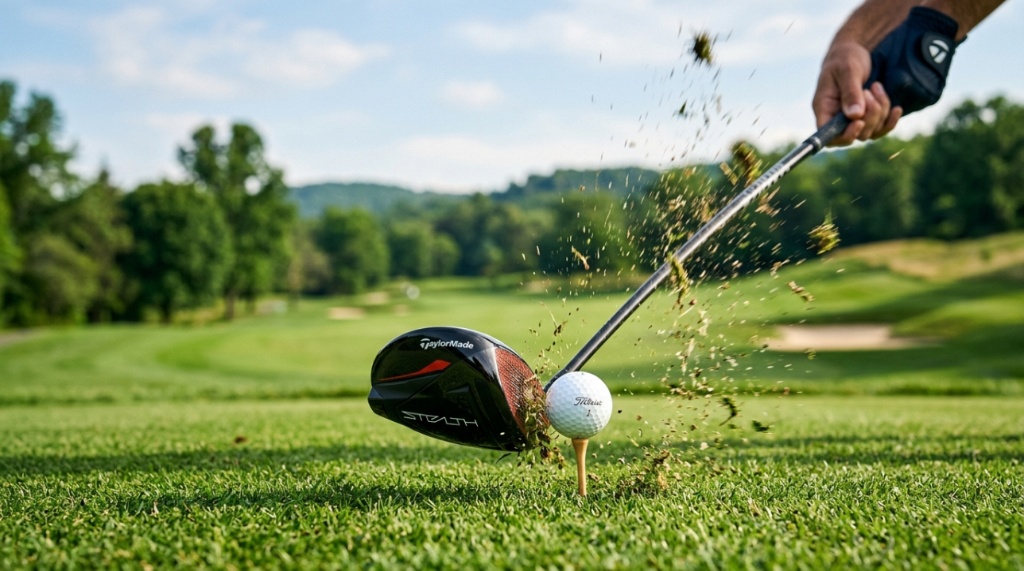
Golf tees directly affect your launch angle and spin. Using the wrong tee height is one of the most overlooked factors in distance. If you tee the ball too low, you hit the ball with the top of the driver face, producing low launch and high backspin—a recipe for short drives. If you tee it too high, you risk hitting under the ball (sky) or hitting it on the extreme bottom of the face. The ideal tee height for a driver places the center of the ball in line with the center of the driver face, or slightly above it for a higher launch.
Choosing the Right Tee Length
Standard plastic tees are usually 2.75 inches long, but for a driver, you need a tee that is at least 3.0 to 3.25 inches long to get the ball elevated properly. Many players use short tees and try to “shallow” their swing, but this only introduces inconsistent strikes. For the best results, look for tees that offer consistent height and durability. Choosing the best affordable golf tees can make a real difference in your setup consistency.
When Should You Buy a New Driver for More Distance?
You should consider buying a new driver when your current model is more than five years old, or if you are consistently hitting it less than 200 yards with a decent swing. Technology in driver faces has advanced significantly, with thinner, hotter faces (like titanium or carbon fiber) that increase ball speed. Additionally, if you have never been fitted for a driver, there is a 90% chance you are using the wrong loft, shaft, or length. Do not wait until you are hitting 180-yard drives. If you feel like you are leaving distance on the table, it is time for an upgrade.
The 5-Year Rule
Driver technology evolves rapidly. A driver from 2019 may have a COR (coefficient of restitution) near the legal limit of 0.830, but new models optimize face flexing and weight distribution. The difference between a 2024 driver and a 2019 driver can be 5-10 yards in carry distance alone, especially on mis-hits. If you are serious about distance, treat a driver as a consumable tool that needs replacement every 3-5 years.
How Can You Use Launch Monitor Data to Choose Equipment?
Launch monitor data removes the guesswork. Key metrics like clubhead speed, ball speed, launch angle, and spin rate tell you exactly what your current equipment is doing. If your spin rate is over 3,000 RPM with a driver, you are robbing yourself of distance. Ideally, you want a spin rate between 2,000 and 2,500 RPM for optimal carry. Launch angle should be between 10-14 degrees for most players. By testing different heads and shafts on a launch monitor, you can match equipment to your numbers, not your preferences.
Three Numbers to Focus On
When testing, look at three numbers:
- Ball Speed: Ideally, you want a smash factor of 1.45 to 1.50 (ball speed divided by clubhead speed). Higher is better.
- Spin Rate: Between 2,000 and 2,500 RPM for a driver.
- Launch Angle: Between 10 and 14 degrees.
If your current equipment produces a spin rate of 3,500 RPM and a launch angle of 8 degrees, you need a higher-lofted driver with a lower-spin shaft. A 30-minute fitting session can add 15-20 yards to your average drive instantly.
Why Does Swing Weight Matter for Distance?
Swing weight is the measure of how heavy the club feels during the swing, not its actual weight. A club that is too heavy (D5 or higher) can cause you to slow down your swing late in the round, robbing you of distance. A club that is too light (C6 or lower) may cause you to overswing, losing control. For most male golfers, a swing weight of D1 to D3 is ideal for distance. This balance allows you to generate maximum speed without sacrificing control.
Adjusting Swing Weight
You can adjust swing weight by changing the grip weight, shaft weight, or adding lead tape to the head. If you feel like your driver is “head heavy” and hard to square, consider a slightly heavier grip or a lighter shaft. If the club feels “whippy” and hard to control, add weight to the head. A properly balanced club promotes a consistent swing path, which leads to better strikes and more distance over 18 holes.
Frequently Asked Questions
Does using a longer tee really increase distance?
Yes, but only indirectly. A longer tee helps you set the ball at the correct height for your driver. If the ball is teed at the right height (center of face or slightly above), you maximize launch angle and reduce spin, which leads to longer drives. Using a standard 2.75-inch tee often results in teeing the ball too low.
Is a stiffer shaft always better for distance?
No. A shaft that is too stiff for your swing speed will cause low launch, low spin, and a loss of distance. The shaft must match your swing speed and tempo. A softer shaft can actually increase distance for slower swingers by helping them launch the ball higher and with less spin.
Can I get more distance by using a different golf ball?
Absolutely. Switching from a high-compression Tour ball to a low-compression distance ball can add 5-10 yards of carry for players with moderate swing speeds. The ball is the only equipment that touches the clubface and the ground, so its construction directly impacts energy transfer.
How often should I replace my driver for distance gains?
Every 3 to 5 years. Modern driver technology improves face flex, aerodynamics, and weight distribution. If you are using a driver that is more than 5 years old, you are likely leaving 10-20 yards on the table compared to a current model.
Does the weight of the driver head affect distance?
Yes. A heavier head (around 200 grams) can help generate momentum, but a lighter head (around 190 grams) can help increase swing speed. The key is finding the right balance for your swing. Lighter heads typically help slower swing speeds, while heavier heads suit aggressive swings.
What is the best loft for a driver for a 90 mph swing speed?
For a 90 mph swing speed, a 10.5 to 12-degree loft is generally ideal. This loft helps produce the optimal launch angle and spin rate for maximum carry distance. Using a 9-degree loft would likely result in lower launch and less distance.
Can a club fitting really add 20 yards to my drive?
Yes, for many golfers. A proper fitting addresses lie angle, shaft flex, loft, and length. If you are using the wrong combination—like a stiff shaft with a low-loft head—a fitting can easily add 15-25 yards by optimizing your launch conditions.
Conclusion
Hitting longer drives is not about brute force or buying the most expensive equipment. It is about synergy—matching your swing speed and mechanics to the correct driver loft, shaft flex, ball compression, and even tee height. Start by getting a basic launch monitor reading to know your swing speed and spin rate. Then, look for a driver with a high MOI and adjustability. Pair it with a low-compression ball and the right tee height. Remember that every piece of equipment works together. A perfectly fitted driver with a wrong ball can still produce subpar results. Take the time to test a few combinations. You might be surprised to find that an extra 20 yards is not in your muscles—it’s in your bag. Stop settling for pop-ups and start using equipment that works with your swing, not against it.