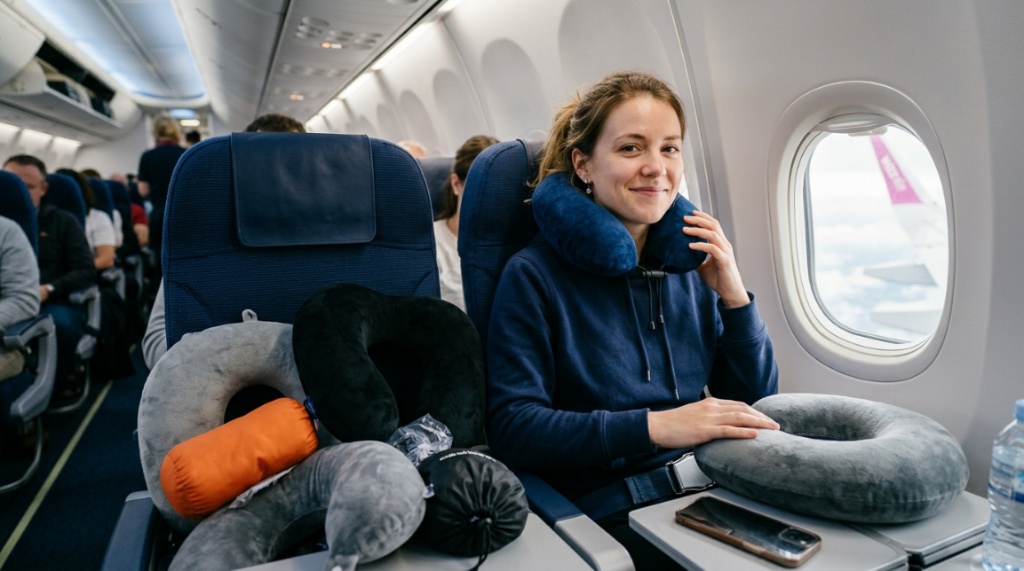
You know that dreaded head-bob. You’re finally dozing off on a flight, and your head snaps forward, jerking you awake with a sore neck. It’s the universal struggle of air travel. The culprit? A pillow that simply doesn’t fit your body. The market is flooded with memory foam, inflatable, and buckwheat options, making it overwhelming to choose one. This guide cuts through the noise, helping you find a travel neck pillow that fits you perfectly, ensuring you land refreshed, not crumpled.
Why Does Your Current Neck Pillow Fail?
Most neck pillows fail because they follow a one-size-fits-all approach. They are designed for an average body type that rarely exists. When a pillow is too loose, it offers no support; when too tight, it pushes your head forward, straining your cervical spine.
The fundamental issue is that your neck length, shoulder width, and sleeping style dramatically change what shape and firmness you need. If you are a side sleeper, you need a taller profile to fill the gap between your ear and shoulder. If you are a back sleeper, you need support under the curve of your neck, not just behind your head. Ignoring these factors results in that familiar, dreaded neck crick.
Understanding Cervical Spine Alignment
Your neck has a natural inward curve. A good travel pillow maintains this curve. If a pillow forces your chin toward your chest or tilts your head sideways, you are not sleeping; you are holding a stretch. Look for pillows that state they provide “cervical support” or have a contoured “C” or “J” shape.
The Impact of Shoulder Width
If you have broad shoulders, a standard U-shaped pillow will slide off. The strap won’t be long enough, or the pillow simply rests on your shoulders rather than wrapping around them. Conversely, if you have narrow shoulders, the pillow often pushes your head up too high, creating a sharp angle in your neck. You need a pillow with adjustable straps or a design that accommodates your specific torso width.
What Are the Main Types of Travel Pillow Materials?
The material dictates the level of support, warmth, and packability. There isn’t a “best” material—only the best one for your comfort preferences. Here is the breakdown you need to make an informed choice.
Memory Foam: The Supportive Classic
Memory foam offers the most robust support. It molds to your shape but pushes back to keep your head aligned. The downside? It is bulky and retains heat. Some newer “shredded” memory foam pillows allow you to remove filling to adjust the loft (height). If you prioritize support over packability, this is your choice.
Inflatable: The Space Saver
Inflatable pillows are ideal for minimalists. They deflate to the size of a water bottle. However, they can feel unstable, and the plastic often makes your skin sweat. Look for hybrid versions that have a soft velvet covering on one side and a micro-adjustable air valve. You can inflate them to your exact desired firmness, which is something memory foam can’t offer.
Microbead and Buckwheat: The Adaptive Fill
Microbeads (like Styrofoam) are lightweight and packable, but they offer little support and shift around constantly. Buckwheat hulls, however, are a game-changer. They are firm, provide excellent airflow (keeping you cool), and mold perfectly to the contours of your neck and shoulder. The trade-off is that they are heavy and make a subtle rustling noise.
| Material | Support Level | Packability | Best For |
|---|---|---|---|
| Memory Foam | High | Low | Long-haul flights, back sleepers |
| Inflatable | Adjustable | High | Carry-on only travelers, campers |
| Buckwheat | Very High | Medium | Side sleepers, hot sleepers |
| Microbead | Low | High | Kids, emergency use |
How Does Your Sleeping Position Determine the Shape?
Your dominant sleep position is the single most critical factor in selecting a shape. A “U” shape works for some, but a “J” shape or a “Wrap” shape might work better for others. Let’s break down the geometry.
The Classic U-Shape: For Back Sleepers
The “U” shape (like a horseshoe) is designed to prevent your head from falling forward. For back sleepers, this works well because the thick parts of the U support both sides of the neck. However, if you tend to roll to the side, the thin front section leaves your chin unsupported, causing your head to droop.
The J-Shape and L-Shape: For Side Sleepers
Side sleepers need a taller “wall” of support on the side of their head. A “J” shape or “L” shape provides a higher loft on one side, filling the space between your ear and shoulder perfectly. It also offers a flat area to rest your face against, preventing the pillow from pushing your nose sideways. Look for pillows specifically labeled “side sleeper” to ensure this asymmetric design.
Adjustable “Wrap” Pillows: For Every Position
These look like a scarf with a buckle. They allow you to tighten the pillow directly around your neck, ensuring it stays in place if you turn your head. This is the best option for combination sleepers (people who shift positions). The firmness is often adjustable via the clasp, giving you more control than a fixed-shape pillow,Planning a long road trip or flight? Make sure your lower back is just as comfortable as your neck by browsing our top recommendations for Affordable Lumbar Support Pillows in Missouri.
Can You Test for the Right Fit Before Buying?
Yes, you can determine the correct sizing without buying a plane ticket. The “wall test” is a practical way to assess height. Sit against a wall with your head facing forward. The distance between your neck and the wall is the approximate loft you need from the pillow.
You should also test the width. A pillow that fits you should stay on your shoulders without you having to tense them. If you are shrugging your shoulders to hold the pillow in place, it is too narrow. Finally, consider the “strap test.” If the adjustable strap is too short to fasten comfortably, the pillow is too wide for your frame.
Measuring Neck Circumference
Use a soft measuring tape around the base of your neck. This number determines whether you need a “small,” “medium,” or “large” fit. Most brands offer a sizing chart, but few people look at it. If your neck measures over 16 inches, you likely need a “tall” or “large” version to avoid a choking sensation.
The “Buckle” Log Test
Many universal pillows have a buckle system. Put the pillow on and tighten it until it is snug but not tight. You should be able to slip two fingers between the pillow and your neck. If you cannot, it is too tight. If you can fit your entire fist, it is too loose.
Which Travel Pillow Design Features Matter Most?
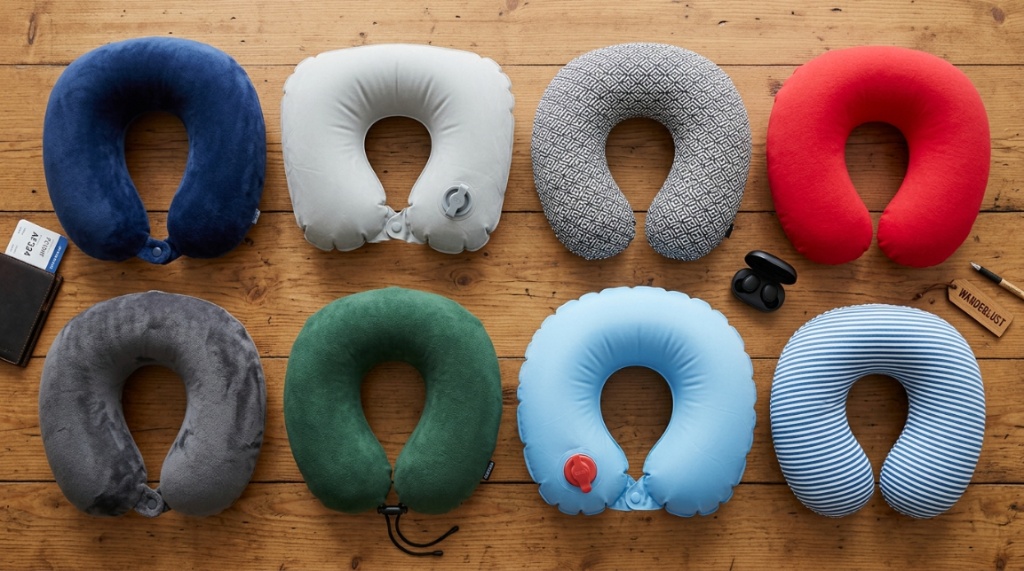
Beyond the shape and fill, the features determine whether a pillow is a joy or a nuisance. Clips, straps, and covers play a huge role in daily usability. Ignoring these details leads to frustration at 30,000 feet.
Why Washable Covers are Non-Negotiable
Travel pillows are breeding grounds for bacteria and oils. If the cover is not removable and washable, you will be pressing your face against years of dirt. Look for covers made from bamboo viscose or moisture-wicking polyester. Cotton is comfy but tends to pill and retain moisture.
The Importance of a Clasp or Strap
When you sleep, your muscles relax. Without a strap, the pillow slides out from under your head. A magnetic clasp is convenient, but a toggle buckle allows for micro-adjustments. Ensure the strap is not located at the front where it can press against your Adam’s apple. A top-mounted strap (over the top of the head) is often more comfortable for side sleepers.
Inflate, Deflate, Wash: The Maintenance Factor
Consider how you will clean the pillow. Inflatable ones need to be wiped down, not machine washed. Memory foam usually requires you to spot clean and air dry. Buckwheat requires you to remove the hulls to wash the case. Choose based on your willingness to do maintenance. If you want low-maintenance, a water-resistant inflatable or a fully machine-washable foam (without a non-removable lining) is best.
Is a Neck Pillow Worth the Baggage Space?
If you are flying economy and hate the window bulkhead, yes. But the truth is, a travel neck pillow only helps if it stays in place. For some, a rolled-up hoodie is more effective. However, if you frequently take red-eyes or have long layovers, a specialized pillow is a worthwhile investment.
The value also depends on the material. A bulky memory foam pillow is not worth it if you only fly twice a year. In that case, an inflatable or a hybrid is better. But if you are a frequent flyer who struggles to sleep in public, a high-quality ergonomic pillow that fits you saves you from neck pain and lost sleep.
Comparing Neck Pillows vs. Window Bulkheads
Many travelers claim the window seat curve is the best pillow. This is true for side sleepers leaning against the wall. However, the wall doesn’t support your head when the plane hits turbulence or during meal service. A neck pillow provides consistent support regardless of the seat you booked. Try to get a pillow with a “hug” feature that clips to the seatbelt if you really need to secure it.
How to Break In a New Travel Pillow
A new pillow shouldn’t hurt immediately, but it might feel unfamiliar. Do not wait until you are on the plane to try it. Start by using it on your couch for a few hours. If it is memory foam, it needs time to expand and soften. If it is buckwheat, it needs time to settle into the contours of your neck.
Adjusting Loft and Firmness
If your pillow allows for fill adjustment, remove or add filling in small amounts. Walk around the house with it on for 10 minutes to simulate movement. If you feel a pinch at the base of your skull, you need to reduce the loft. If you feel your head floating, you need more fill. This “test drive” ensures the pillow is broken in before it matters.
When to Replace Your Pillow
Travel pillows lose their shape over time. If you notice permanent dents in the memory foam, or if the inflatable valve leaks, replace it. Using a worn-out pillow is worse than using none because it offers uneven support. As a rule of thumb, replace foam pillows every 2-3 years and inflatable ones every 1-2 years depending on usage.
What Is the Ideal Budget for a Fitting Pillow?
You don’t need to spend $80 to get a good fit, but you should avoid the $5 drugstore U-pillow. The sweet spot is between $20 and $45. In this range, you get decent materials and a return policy. High-end pillows over $50 often offer premium covers and longer warranties, but the fit is the same as a good mid-range option.
When budgeting, consider the cost per use. If you fly 10 times a year, a $40 pillow is $4 per trip. That is cheaper than a neck massage after the flight. The key is to prioritize features that address your fit issues, not ones that look cool or have a fancy brand name. For a detailed comparison of budget-friendly options that don’t sacrifice neck health, you should check out this guide on picking a travel neck pillow that fits you.
Can a Neck Pillow Help with Snoring or Sleep Apnea?
Yes, a correctly fitted neck pillow can reduce snoring. Snoring often occurs when your head tilts back, blocking the airway. A cervical pillow supports the neck, keeping the airway open. However, it is not a medical device for sleep apnea. If you have diagnosed sleep apnea, a travel pillow is not a substitute for a CPAP machine unless specifically cleared by your doctor.
For occasional snoring related to posture, a firmer pillow that prevents your chin from dropping is helpful. The “J” shape is often better for this than a “U” shape because it prevents the head from tilting backward. If sleeping with a travel pillow reduces your snoring, you’ll also feel more rested and less groggy.
Identifying the Right Angle for Airway Health
Your ear, shoulder, and hip should be in a straight line. When they are, your airways are vertical. When you sleep in a cramped plane seat, maintaining this alignment is hard. A pillow that keeps your head level with your spine is the goal. If you wake up with a dry mouth, your head may have been tilted back too much.
Are There Alternatives for Those Who Hate Neck Pillows?
If you despise the feeling of something around your neck, you have alternatives. The “bun” style pillow (like a donut but for your head) is placed behind your neck and rests on the headrest. This works if your seat has a high headrest. Alternatively, a compact travel blanket can be folded into a custom shape.
However, most alternatives lack the wrap-around stability of a neck pillow. If you try a bun pillow, ensure it is not too thick, or it will push your head forward. If you use a blanket, roll it tightly and place it behind your lower back to tilt your pelvis, which helps your neck relax naturally.
The “Hoodie” Hack: An Emergency Fit
Stuff a folded hoodie into a drawstring bag and tie it around your neck. This provides a similar shape to a “U” pillow, but it is thicker and less adjustable. It’s a good backup but not a consistent solution. For a real fit, investing in a purpose-built pillow is eventually necessary.
Frequently Asked Questions
Can a travel neck pillow be used for side sleepers on a plane?
Yes, but you need a “J” shape or a wrap-around design with a high loft on the sides. Standard “U” pillows do not provide enough height for proper side-sleeping alignment.
What is the best firmness for a neck pillow?
Medium-firm is generally best. You want the pillow to compress slightly but still hold your head up. If it sinks completely, it is too soft; if it feels like a rock, it is too hard.
Is an inflatable neck pillow comfortable?
Modern inflatables are more comfortable than older ones, especially if they have a soft outer layer. The key is to not overinflate them. Leave about 10% of the air out for a more cushioning effect.
How do I wash a neck pillow?
Always check the tag. Most covers are machine washable. For memory foam, spot clean with a damp cloth and mild soap. Never submerge memory foam in water, as it destroys the structure.
Can a neck pillow make neck pain worse?
Yes, if you pick the wrong size. A pillow that is too tall pushes your head up, pinching nerves. If you have existing neck problems, consult a physiotherapist before choosing an ergonomic pillow.
How tight should a travel neck pillow strap be?
It should be snug enough to keep the pillow from shifting, but loose enough to prevent pressure on the front of your neck. You should be able to swallow comfortably while wearing it.
Are buckwheat pillows noisy on a plane?
Buckwheat hulls make a soft rustling sound when they move. It’s not loud, but it may bother light sleepers. If you are very sensitive to noise, choose memory foam or a silent inflatable.