

How to Select the Best Salt for Coral Tanks in Home Aquariums
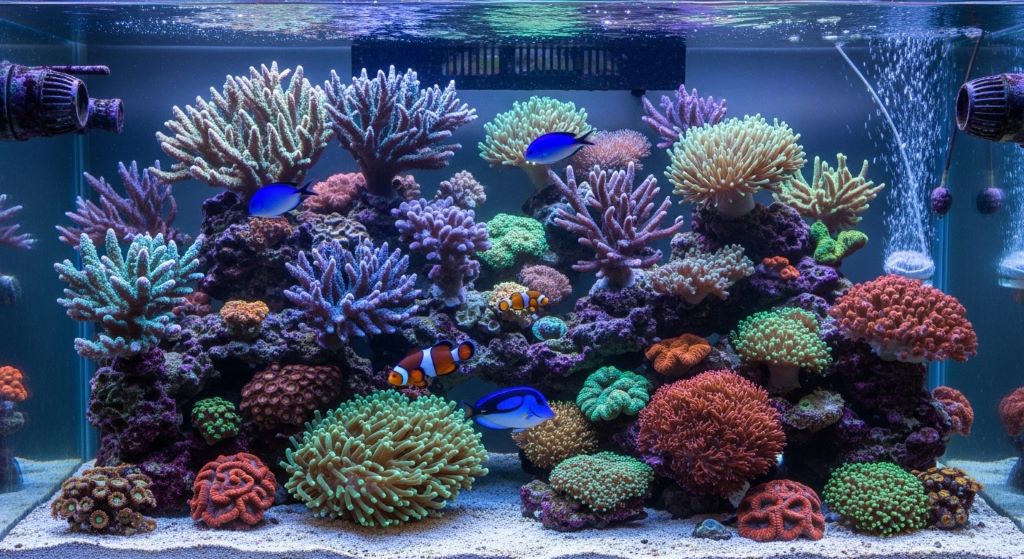
Setting up a coral tank is one of the most rewarding things a hobbyist can do. The colors, the movement, and the sheer beauty of a thriving reef are hard to match. However, getting there requires more than just good lighting and clean water. The salt you choose plays a central role in whether your corals survive or flourish.
Many beginners overlook this detail. They assume all aquarium salts are more or less the same. In reality, different salt mixes vary significantly in their mineral composition, trace element levels, and overall consistency. These differences have a direct impact on your reef aquarium care routine and on how well your corals grow over time.
This guide will walk you through everything you need to know about selecting the right salt for your coral tank. By the end, you will have a clear picture of what to look for, what to avoid, and how to make a confident choice.
Why Salt Mix Quality Matters for Coral Health
Corals are living animals. They may look like rocks or plants, but they are highly sensitive organisms. They absorb nutrients and minerals directly from the water around them. Therefore, the chemistry of your saltwater has an enormous influence on their health.
Natural seawater contains dozens of elements. The most important ones for coral health are calcium, magnesium, alkalinity (also called carbonate hardness), potassium, and strontium. A quality salt mix replicates this natural balance as closely as possible.
When a salt mix is poorly formulated or inconsistent, corals respond quickly. You may notice bleaching, slow growth, or tissue loss. These are signs that the water chemistry is off. Additionally, poor salt quality can lead to unpredictable swings in parameters, which are even more stressful for corals than a consistently imperfect environment.
The Core Ingredients of a Good Reef Salt Mix
Not all salts are created equal. Understanding the key components of a quality reef salt mix will help you make a smarter purchase. Here is what to look for on the label and in product documentation:
Calcium
Calcium is essential for coral skeleton formation. Stony corals especially rely on calcium to build their calcium carbonate structures. A good salt mix should produce calcium levels between 380 and 450 parts per million (ppm) when mixed to natural seawater salinity. Levels outside this range can slow growth or cause skeletal problems.
Alkalinity
Alkalinity, measured in dKH (degrees of carbonate hardness), acts as a buffer in the water. It stabilizes pH and supports coral calcification alongside calcium. The target range for most reef tanks is 8 to 12 dKH. However, many experienced reefers prefer to keep it between 8 and 9.5 dKH for long-term stability.
Magnesium
Magnesium is the unsung hero of reef chemistry. It keeps calcium and alkalinity from precipitating out of solution. Without adequate magnesium, maintaining stable calcium and alkalinity becomes very difficult. A salt mix should deliver magnesium levels between 1250 and 1350 ppm.
Trace Elements
Trace elements include iodine, strontium, potassium, fluoride, and many others. These are needed in small amounts but are still important. They support coral coloration, enzyme function, and overall vitality. Premium salt mixes include a carefully balanced trace element profile. Budget mixes often fall short in this area.
Types of Reef Salt Mixes Available
The aquarium market offers several categories of salt mixes. Each has its own strengths depending on your tank type and experience level.
Natural Seawater Salinity Mixes
These mixes are designed to match the parameters of natural ocean water. They are ideal for fish-only tanks or reef tanks with softer corals like mushrooms and zoanthids. They are also a good starting point for beginners. However, they may not provide elevated calcium and alkalinity levels needed for fast-growing stony corals.
High-Calcium and High-Alkalinity Mixes
These mixes are formulated specifically for tanks with a high density of stony corals (SPS corals). They provide elevated levels of calcium and alkalinity right out of the bucket. This reduces the need for additional dosing supplements, at least in the early weeks after a water change. Therefore, they are popular among experienced reefers focused on coral growth tips and maximizing skeletal development.
Low-Nutrient Mixes
Some salt mixes are designed to start with very low levels of nitrates and phosphates. This is useful for tanks running ultra-low-nutrient systems. However, very low nutrients can also stress corals that need some organic input. Therefore, these mixes suit experienced hobbyists who closely monitor their water parameters.
How to Read a Salt Mix Label
Most quality salt brands publish detailed analysis sheets for their products. These sheets show the actual parameter values achieved when the salt is mixed at a specific salinity. Knowing how to read these will help you compare products side by side.
First, check the salinity at which the parameters were measured. Most are tested at 1.025 specific gravity, which is standard for reef tanks. If a brand tests at a different salinity, the numbers may look different from competitors. Make sure you are comparing apples to apples.
Second, look at how many parameters are listed. A brand confident in its product will publish a long list. Brands that only list a few values may be hiding inconsistencies elsewhere.
Third, look for batch consistency information. Some premium brands test every batch before it ships and include a lot number with documented results. This level of transparency is a strong sign of quality and reliability.
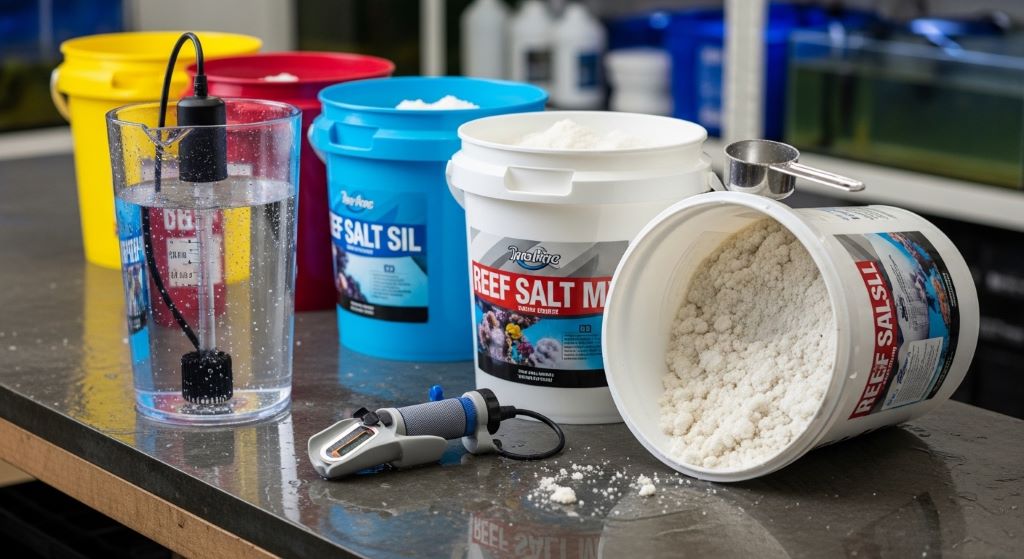
Mixing Salt Correctly for Best Results
Even the best salt mix can underperform if it is not prepared correctly. The mixing process matters more than many hobbyists realize. Here are some key practices to follow:
- Always use RODI (reverse osmosis deionized) water. Tap water contains chlorine, chloramines, and other contaminants that interfere with your water chemistry and can harm corals.
- Mix the salt for at least 24 hours before use. Some salts need longer to fully dissolve. Using freshly mixed, incompletely dissolved saltwater can expose corals to pockets of highly concentrated solution.
- Use a powerhead or pump while mixing. Agitation speeds up dissolution and ensures an even blend throughout the container.
- Test the parameters of your freshly mixed water before adding it to the tank. This tells you exactly what you are working with before any changes are made.
- Keep mixed saltwater at tank temperature before adding it. A sudden temperature shift during a water change can stress fish and corals alike.
Additionally, never mix salt directly in your display tank. This can cause localized spikes in salinity or pH that harm inhabitants. Always prepare new saltwater in a separate container.
How Salt Choice Connects to Coral Growth Tips
Salt selection is just one piece of the puzzle, but it is a foundational one. When you choose the right salt, you give your corals a stable, mineral-rich environment to grow in. This reduces the amount of supplemental dosing you need to do, which in turn reduces the risk of human error.
One of the most practical coral growth tips any experienced reefer will share is to keep parameters stable. Swings in calcium, alkalinity, or salinity are far more harmful than consistently imperfect numbers. A reliable salt mix that delivers the same results batch after batch makes this stability much easier to achieve.
Additionally, regular water changes are a core part of reef aquarium care. Each change replenishes trace elements that corals consume over time. A quality salt mix maximizes the benefit of every water change. Therefore, the two practices work hand in hand.
Common Mistakes When Choosing Aquarium Salt
Even well-intentioned hobbyists make errors when selecting or using salt. Knowing these pitfalls in advance can save you time, money, and the health of your corals.
Choosing price over quality is a common mistake. Budget salts often have inconsistent formulations and lower trace element content. The savings upfront can cost you far more in supplements, treatments, and livestock losses down the road.
Switching salts too frequently is another issue. Each brand produces slightly different baseline parameters. Switching often means your tank is constantly adjusting, which stresses corals. If you find a salt that works well, stick with it.
Using a fish-only salt for a reef tank is also a problem. Fish-only salts are often formulated to lower standards. They may lack the trace elements and elevated calcium levels that corals require. Always use a salt specifically labeled for reef or coral tanks.
Finally, skipping the parameter test after mixing is risky. Just because you followed the instructions does not mean the result will be perfect. Testing is a fast, simple step that can prevent a lot of problems.
Popular Salt Brands Worth Considering
Several brands have earned strong reputations among serious reef hobbyists. While individual preferences vary, the following are consistently recommended based on performance, consistency, and community feedback:
- Red Sea Salt and Red Sea Coral Pro Salt are widely used. The standard version targets natural seawater parameters, while Coral Pro delivers elevated calcium and alkalinity. Both are known for consistency.
- Tropic Marin Pro-Reef is favored for its comprehensive trace element profile and batch testing. It is a premium option often recommended for sensitive SPS-dominated tanks.
- Brightwell Aquatics NeoMarine is a popular choice among experienced reefers who prefer a natural seawater baseline with solid trace element support.
- Fritz RPM is a newer brand that has gained a strong following for its affordability relative to quality and its transparency in publishing detailed analysis sheets.
However, no single brand is right for every tank. Your best choice will depend on your coral types, your water change schedule, and your supplementation routine. Reading community forums and reviews specific to your setup is always a worthwhile step.
Storing Salt Mix Properly
How you store your salt mix affects its performance. Salt is hygroscopic, which means it absorbs moisture from the air. If your salt clumps or absorbs humidity, its chemical balance can shift. This leads to inconsistent results when you mix a new batch.
Always seal the container tightly after each use. Store it in a cool, dry place away from direct sunlight. Avoid keeping it in a damp garage or near the tank itself, where humidity is higher. Additionally, do not store salt in metal containers. Salt is corrosive and can react with metal over time.
If your salt has significant clumping, you can break it up before measuring, but be aware that the composition may have already shifted. In that case, always test the mixed water before adding it to your tank.
Conclusion
Selecting the right salt for your coral tank is one of the most important decisions you will make as a reef hobbyist. It affects water chemistry, coral health, and the long-term success of your entire setup.
Focus on salts that offer balanced calcium, alkalinity, and magnesium, along with a solid trace element profile. Choose brands that are transparent about their formulations and test their batches consistently. Mix your saltwater properly using RODI water, give it time to dissolve fully, and always test before adding it to your tank.
Remember that stable water chemistry is the foundation of all reef aquarium care. The right salt makes that stability easier to achieve and maintain. Combined with regular water changes and attentive husbandry, a quality salt mix gives your corals the best possible environment to grow, color up, and thrive for years to come.
Frequently Asked Questions
1. How often should I do water changes in a coral reef tank?
Most reef hobbyists recommend changing 10 to 20 percent of the tank volume every one to two weeks. This replenishes trace elements and helps control nitrate and phosphate levels. However, the ideal frequency depends on your tank’s bioload, coral density, and whether you use a dosing system for calcium and alkalinity.
2. Can I use regular table salt or pool salt in a reef tank?
No. Table salt and pool salt are not suitable for reef tanks under any circumstances. They lack the trace elements and mineral balance that marine life requires. Additionally, they often contain additives like iodine or anti-caking agents that are harmful to corals and fish. Always use a salt specifically formulated for marine aquariums.
3. What salinity level is best for a coral reef tank?
The recommended salinity for a reef tank is 1.025 to 1.026 specific gravity, which is equivalent to approximately 35 parts per thousand (ppt). This matches natural oceanic salinity. Staying within this range supports both coral health and the beneficial bacteria in your biological filter.
4. Is more expensive salt always better for corals?
Not necessarily. Price can be a rough indicator of quality, but it is not a guarantee. Some mid-priced salts perform very well, while some premium products may not suit every tank type. Focus on published parameter values, batch consistency, and community reviews rather than price alone. Many hobbyists find excellent results with salts in the mid-price range.
5. How long can I store mixed saltwater before using it?
Mixed saltwater can be stored for up to a week if kept in a sealed, clean container with a pump or powerhead running to maintain oxygenation. Beyond a week, the water can begin to develop bacteria or experience parameter drift. Therefore, it is best to mix saltwater close to the time you plan to use it for water changes.
Related Topics:
Four Kitchen Features That Create the Wow Factor
Planning Your Perfect Romantic Summer Picnic for Two